A paper published yesterday in Physical Review Applied takes a look at what exactly happens inside a skull from a hard hit or fall using bioengineered simulations that track how the brain behaves upon impact, specifically reconstructing the inertial stresses and strains that prevail inside a brain that's just been hit hard from the side.
"The brain not only rings, but it has a distinct pattern of ringing when the head is hit from the side and experiences rotational acceleration," said senior author Mehmet Kurt, a mechanical engineer at Stevens Institute of Technology.
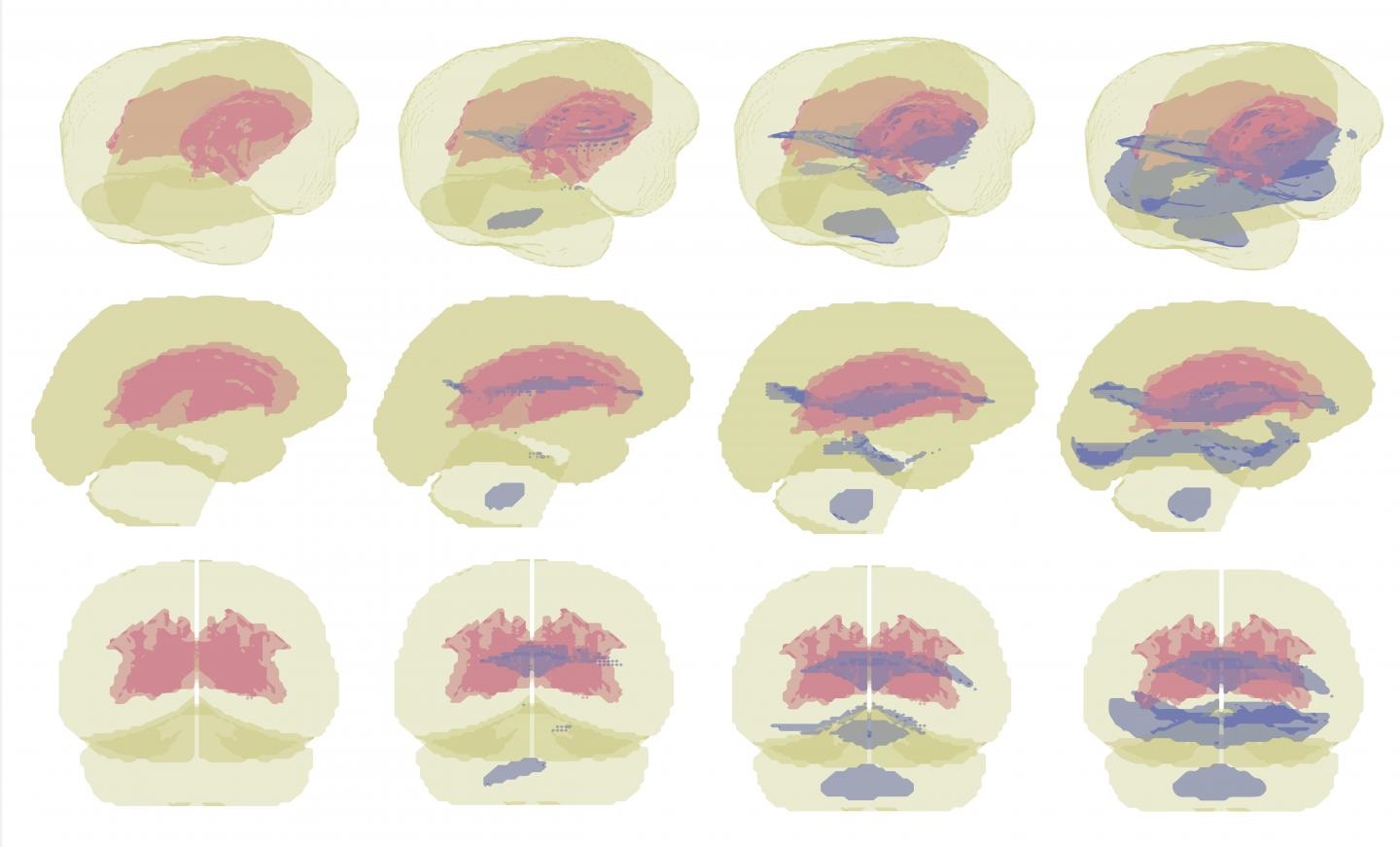
By analyzing a combination of simulated and human data of brain movement that have led to concussions, Kurt and his group reveal that side impacts to the head lead to rotational accelerations that cause mechanical vibrations to concentrate in two brain regions: the corpus collosum, the bridge that links the hemispheres, and the periventricular region, white matter lobes at the brain's root that help speed muscle activation.
Search Antibodies Search Now Use our Antibody Search Tool to find the right antibody for your research. Filter
by Type, Application, Reactivity, Host, Clonality, Conjugate/Tag, and Isotype.
The team also found that the skull's internal geometry and the gelatinous nature of the brain cause these two regions to resonate at certain frequencies and receive more mechanical energy in the form of shearing forces than the rest of the brain. More shear strain presumably yields more tissue and cell damage, particularly since shear, opposing motions tend to deform brain tissue more readily than other biological tissues.
"A hit to the head creates non-linear movement in the brain," said first author Javid Abderezaei. "That means that small increases in amplitude can lead to unexpectedly big deformations in certain structures."
Image: During a side hit to the head, deep white matter (pink) and structures near the corpus callosum (purple) are most vulnerable to injury. Image courtesy of Stevens Institute of Technology.