An enzyme that is critical to both survival of tumors and their uncontrolled growth has been identified by University of California San Diego researchers. A paper describing the potential target for new drugs was published in Cell Metabolism yesterday.
In the study, researchers identified an enzyme called LPCAT1, whose levels increase in cancer and which plays a key role in tumor growth by changing the phospholipid composition of the cancer cells' plasma membrane, allowing amplified and mutated growth factor signals to spur tumor growth. Without LPCAT1, tumors cannot survive. When the team genetically depleted LPCAT1 in multiple types of cancer in mice, including highly lethal glioblastomas and an aggressive lung cancer, malignancies shrank dramatically and survival times improved.
The results, wrote the authors, demonstrate that LPCAT1 is an important enzyme that becomes dysregulated in cancer, linking common genetic alterations in tumors with changes in their metabolism to drive aggressive tumor growth.
Search Antibodies Search Now Use our Antibody Search Tool to find the right antibody for your research. Filter
by Type, Application, Reactivity, Host, Clonality, Conjugate/Tag, and Isotype.
 "Advances in DNA sequencing technologies have reshaped our understanding of the molecular basis of cancer, suggesting a new and more effective way of treating cancer patients," said senior author Paul S. Mischel, M.D. "However, to date, precision oncology has yet to benefit many patients, motivating a deeper search into understanding how genetic alterations in tumors change the way cancer cells behave, and potentially unlocking new ways to more effectively treat patients.
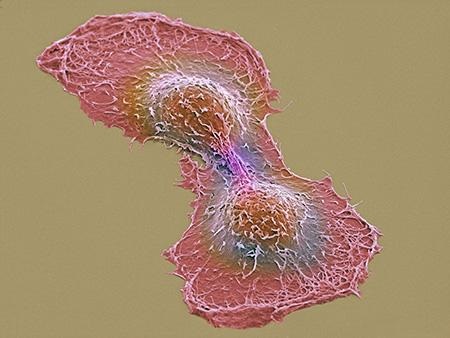
Image: A false color electron micrograph of two cancer cells. Image courtesy of Thomas Deerinck, National Center for Microscopy and Imaging Research, UC San Diego.