Feng Zhang from the Broad Institute of MIT and Harvard has developed a new system, called RESCUE, that allows RNA edits to be made that were not previously possible. Targeting disease-linked mutations in RNA, which is relatively short-lived, would avoid making permanent changes to the genome.
In a paper published in Science today, Zhang and his team describe use of a deactivated Cas13 to guide RESCUE to targeted cytosine bases on RNA transcripts, as well as use of a novel, evolved, programmable enzyme to convert unwanted cytosine into uridine—thereby directing a change in the RNA instructions. RESCUE builds on REPAIR, a technology developed by Zhang's team that changes adenine bases into inosine in RNA.
RESCUE expands the landscape that CRISPR tools can target to include modifiable positions in proteins, such as phosphorylation sites for the first time. Such sites act as on/off switches for protein activity and are notably found in signaling molecules and cancer-linked pathways.
Search Antibodies Search Now Use our Antibody Search Tool to find the right antibody for your research. Filter
by Type, Application, Reactivity, Host, Clonality, Conjugate/Tag, and Isotype.
"To treat the diversity of genetic changes that cause disease, we need an array of precise technologies to choose from. By developing this new enzyme and combining it with the programmability and precision of CRISPR, we were able to fill a critical gap in the toolbox," says Zhang.
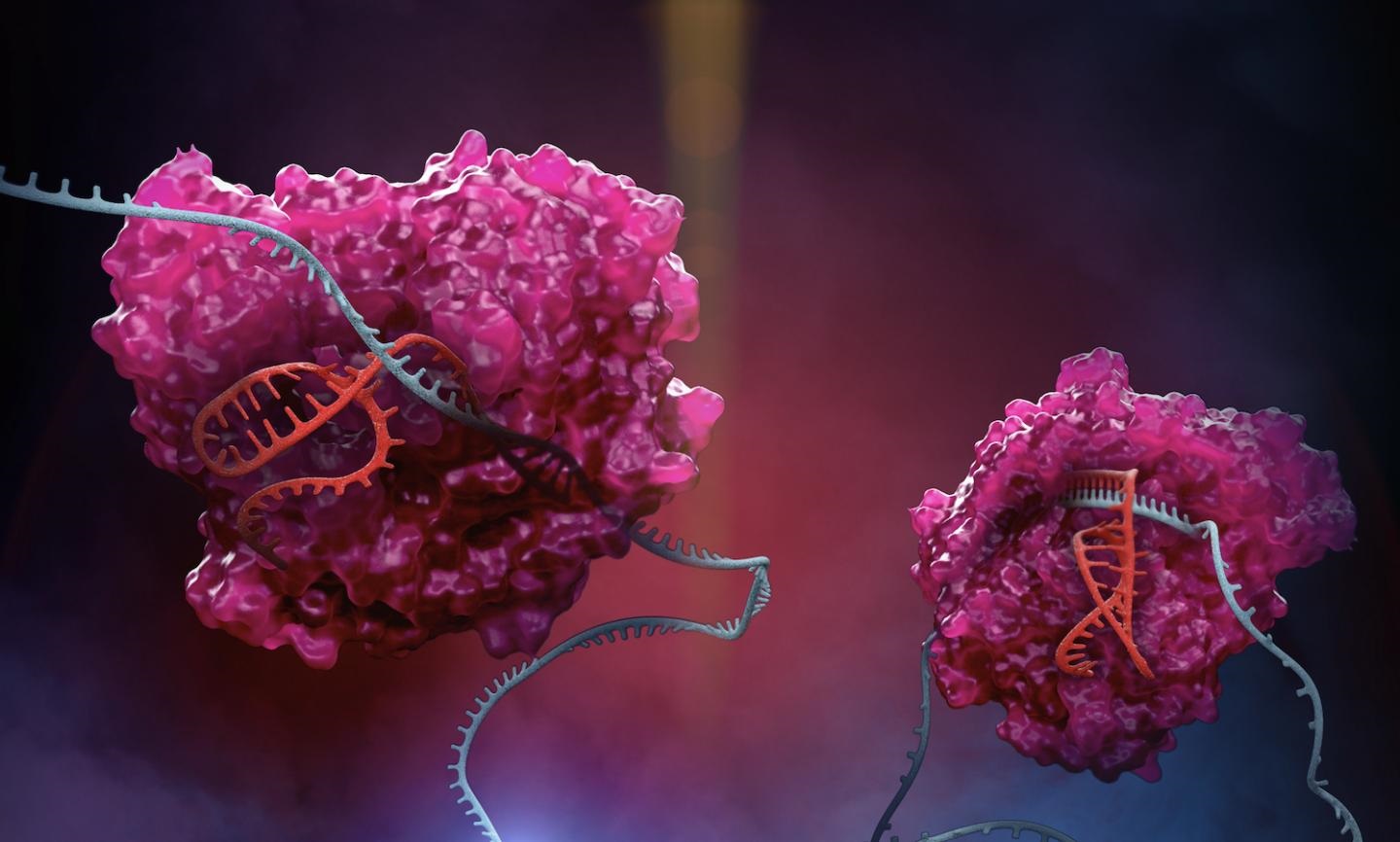
RESCUE can be guided to any RNA of choice, then perform a C-to-U edit through the evolved ADAR2 component of the platform. The team took the new platform into human cells, showing that they could target natural RNAs in the cell as well as 24 clinically relevant mutations in synthetic RNAs. They then further optimized RESCUE to reduce off-target editing, while minimally disrupting on-target editing. Expanded targeting by RESCUE means that sites regulating activity and function of many proteins through post-translational modifications, such as phosphorylation, glycosylation, and methylation can now be targeted for editing.
A major advantage of RNA editing is its reversibility, in contrast to changes made at the DNA level, which are permanent. Thus, RESCUE could be deployed transiently in situations where a modification may be desirable temporarily, but not permanently. To demonstrate this, the team showed that in human cells, RESCUE can target specific sites in the RNA encoding β-catenin, that are known to be phosphorylated on the protein product, leading to a temporary increase in β-catenin activation and cell growth. If such a change was made permanently, it could predispose cells to uncontrolled cell growth and cancer, but by using RESCUE, transient cell growth could potentially stimulate wound healing in response to acute injuries.
The Zhang lab plans to share the RESCUE system broadly. The technology will be freely available for academic research through the non-profit plasmid repository Addgene. Additional information can be found on the Zhang lab's webpage.
Image: The CRISPR family enzyme Cas13 at work. Cas13 (pink), is at the heart of the RESCUE platform, where it uses a special guide (red) to target RNAs in the cell (blue). Image courtesy of Stephen Dixon