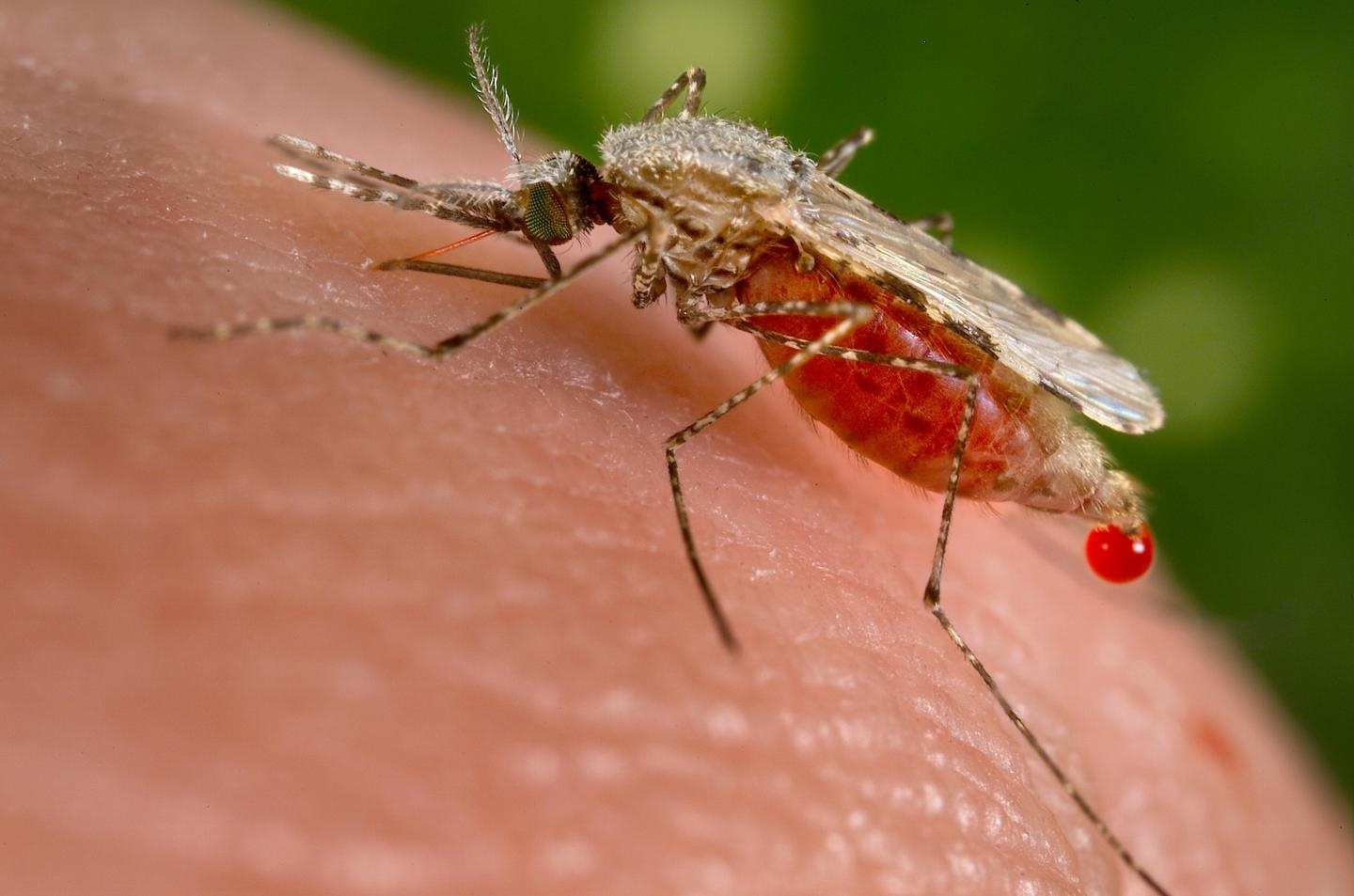
Malaria kills roughly 450,000 people per year, most of them children and pregnant women. And the Anopheles mosquitos—the ones that spread malaria—are developing resistance against the chemical insecticides used to control them. What’s more, the toxic side effects of these chemicals are a concern of their own.
But in a study published today in Nature Communications, scientists present what may be malaria’s Achilles heel: a neurotoxin that isn’t harmful to any living thing except Anopheles mosquitos. The neurotoxin is produced by a strain of bacteria that, years ago, was found to have the capacity to kill Anopheles, but since its method of attack was not understood, it couldn’t be replicated or used as an alternative to chemical insecticides.
The team attributes their success to modern gene sequencing techniques. They hit the bacteria with radiation, creating mutant bacterial strains that could not produce the toxin. By comparing the nontoxic strains to the toxic strain, they found proteins in the bacteria that are the keys to toxin production.
Search Antibodies Search Now Use our Antibody Search Tool to find the right antibody for your research. Filter
by Type, Application, Reactivity, Host, Clonality, Conjugate/Tag, and Isotype.
“Identifying the mechanisms by which the bacteria targets Anopheles has not been easy,” says Sarjeet Gill of the University of California. “We were excited not only to find the neurotoxin, called PMP1, but also several proteins that likely protect PMP1 as it’s being absorbed in the mosquito’s gut.”
Many neurotoxins generally target vertebrates, and PMP1 bears 30% chemical similarity to botulinum or tetanus, both highly toxic to humans. Because the neurotoxin does not affect humans, vertebrates, fish, or even other insects, Gill believes the bacteria that produce PMP1 likely co-evolved alongside Anopheles mosquitos. “It was surprising for us that PMP1 is not toxic to mice even by injection,” Gill notes.
 The researchers have applied for a patent on this discovery and now hope to find partners that will help them develop their bacteria-based Anopheles insecticide. These findings also open the door to new avenues of research on additional environmentally friendly insecticides.
“There is a high likelihood that if PMP1 evolved to kill the Anopheles mosquito, there are other toxins that can kill other disease-spreading pests,” Gill suggests. “This could just be the start of a new way to prevent hundreds of thousands from getting sick and dying every year.”
Image: Female Anopheles stephensi mosquito obtaining a blood meal from a human host. This mosquito is a known transmitter of malaria, with a distribution that ranges from Egypt all the way to China. Image courtesy of Jim Gathany/CDC.