A multiorgan-on-a-chip system that can accurately capture the toxic effects of chemotherapies that have been metabolized by the liver has been created. The technology could help scientists measure both the effectiveness and potential side effects of existing and new drugs faster and more accurately compared to standard preclinical models.
Drug candidates tested using animal models have a high clinical failure rate, and safety studies based on individual human cells can miss toxicity in larger organ systems such as the liver and heart. As a result, candidates with an initially promising safety profile can perform poorly in clinical trials due to unanticipated and damaging side effects.
In a paper published today in Science Translational Medicine, Christopher McAleer from the University of Central Florida and colleagues from the Roche Innovation Center and Hesperos describe a body-on-a-chip model that reliably evaluates both on- and off-target effects of chemotherapies on multiple organs simultaneously.
Search Antibodies Search Now Use our Antibody Search Tool to find the right antibody for your research. Filter
by Type, Application, Reactivity, Host, Clonality, Conjugate/Tag, and Isotype.
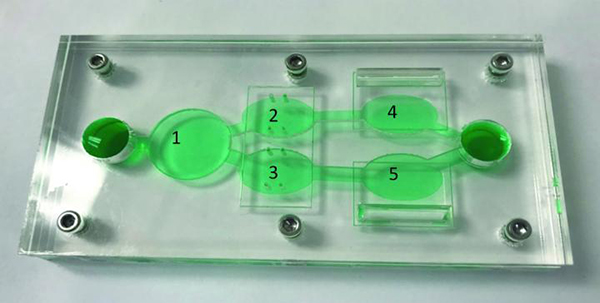
Their system contains five chambers that can house different populations of human cancer and organ cells, some of which are grown on electrical modules, in a recirculating medium that mimics blood circulation. The system can be easily and quickly adapted by inserting new chips in different compartments, allowing for flexible testing of different organ systems.
Experiments revealed the chemotherapy diclofenac exerted toxic effects on liver cells (reducing liver viability by 30%) in a system representing bone marrow cancer. In a different configuration, the chemotherapy tamoxifen affected the function of heart cells and was more effective against drug-resistant vulva cancer when combined with the blood pressure drug verapamil.
"With this system, medicinal chemists can test multiple variations of a drug candidate with milligram quantities of the compound, at the pre-animal stage. Normally to go into animals, scale-up needs to occur to manufacture grams to kilograms of a compound, which generally limits animal trials to one candidate because it is expensive," Hesperos CEO and president Michael Shuler explained.
Image: The pumpless system rocks back and forth to recirculate the medium, and has electrodes for stimulating the tissues, and connections to interface with measurement systems. Coverslips (1, 3, and 5) and microfabricated chips, including chips with microscale cantilevers (2) for measuring force and electrodes (4) for electrical monitoring in the tissue, can be included in the system in a number of configurations. The tissues included can be liver, heart, cancer, bone marrow, skeletal muscle, spinal cord neurons, brain neurons, and others. The system is easy to assemble and operate, and take up only a small amount of space, at about 2.5" in width, and 4.5" in length. Image courtesy of Hesperos.