A new drug that inhibits neonatal seizures in rodent models could open up new avenues for the treatment of epilepsy in human newborns. Researchers have identified that gluconate—a small organic compound found in fruit and honey—acts as an anticonvulsant, inhibiting seizures by targeting the activity of chloride channels in neonatal neurons. The research was published today in Molecular Brain.
“Neonates are the most vulnerable population to seizures but there is still no effective medication for the treatment of neonatal epilepsy,” says senior author Gong Chen of Penn State. “The incidence of epilepsy is highest in the first year of life, with two to four infant babies suffering from neonatal epilepsy for every 1,000 live births in the United States.”
Over the past decades, many drugs have been developed to treat epilepsy in adults. However, neonatal epilepsy patients are often resistant to or do not respond to current anti-epilepsy drugs, and long-term use of some of these treatments may have side effects on brain development. In the current study, the researchers demonstrated that gluconate can inhibit seizure activity better in neonatal neurons than it can in adults.
Search Antibodies Search Now Use our Antibody Search Tool to find the right antibody for your research. Filter
by Type, Application, Reactivity, Host, Clonality, Conjugate/Tag, and Isotype.
“Gluconate is a small organic compound that is produced through the oxidization of glucose in many plants, fruits, and honey,” says first author Zheng Wu. “It has minimal side effects when compared to other organic ions. Because of this, our discovery of its anti-seizure function in neonates could have an accelerated path toward therapeutic development for use in the treatment of neonatal epilepsy.”
The research team found that gluconate inhibits neonatal seizures by targeting what are known as CLC-3 chloride channels. These channels mediate a large ion current in neonatal brains but are less active in adult brains. Gluconate appears to be too large to pass through the small openings of the CLC-3 channels and therefore acts as a channel blocker.
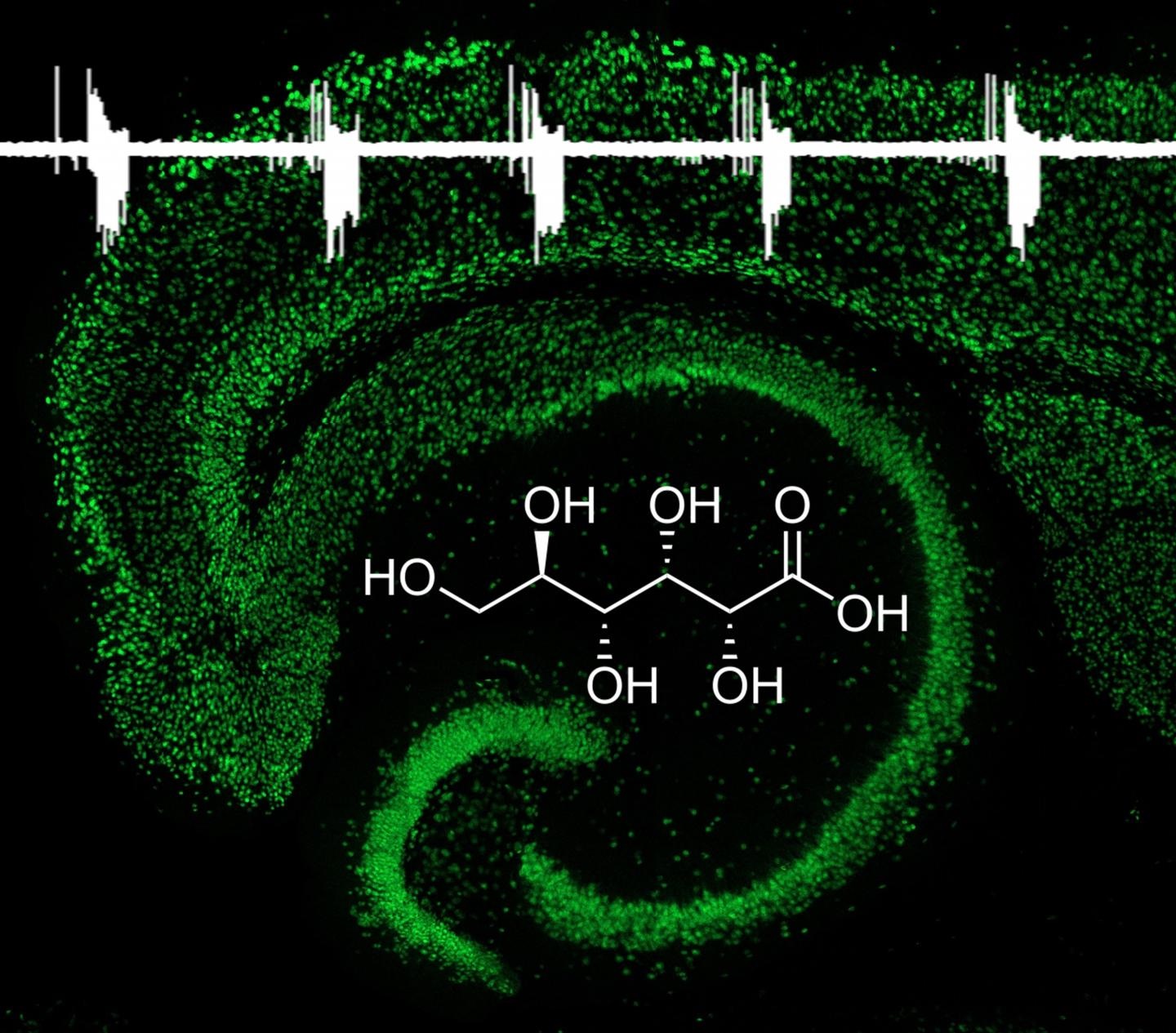
“We were surprised that gluconate targeted CLC-3 chloride channels because they have been associated with regulating neuronal transmission, glioma proliferation, and neuron cell death, but until now, there was no mention of neonatal seizure at all,” Wu says. “Here we found not only that CLC-3 chloride channels are highly expressed in the neonatal brain but also that they are closely related to neonatal seizures. Importantly, gluconate not only blocks the CLC-3 chloride channels but it also significantly inhibits neonatal seizure activity.”
Image: Gluconate, a small organic molecule, inhibits neonatal seizures in rodent models and could open up new avenues for the treatment of epilepsy in human newborns. The image illustrates the structure of neonatal hippocampus (green), overlaid with a typical electrophysiological trace of seizure activity, and the molecular structure of gluconate. Image courtesy of Chen Laboratory, Penn State.