Resistance by disease-causing pathogens to existing antibiotics is increasing, endangering millions of lives and costing billions of dollars. In a study published yesterday in Nature Communications, researchers show that insects and their microbiomes may be a rich new source of antibiotics for use in human medicine.
Streptomyces, the class of bacteria that give us many of our antibiotics, evolved about 380 million years ago and have since diverged into many lineages, some of which are more commonly found in soil and others that are associated with insects. That evolutionary distance means that insect-associated microbes have adapted to their own unique environmental contexts.
“It follows that if you look in a different evolutionary context, you find new chemistry,” says first author Marc Chevrette.
According to the researchers, insects may help select for antibiotics that are not toxic to animals. And because many insects rely on microbial antibiotics to combat ever-evolving pathogens in their own environment, they have likely selected for antibiotics that can overcome common resistance mechanisms.
Search Antibodies Search Now Use our Antibody Search Tool to find the right antibody for your research. Filter
by Type, Application, Reactivity, Host, Clonality, Conjugate/Tag, and Isotype.
To survey a large portion of insect diversity, the team collected more than 2,500 species across all major groups of insects, including flies, ants and bees, moths and butterflies, beetles, and more, from all over the world. In all, the insects provided more than 10,000 microbes to test. The team isolated another 7,000 strains from soil and plant sources.
The team did 50,000 trials that tested each microbe’s ability to inhibit the growth of 24 different bacteria and fungi, many of which, like methicillin-resistant Staphylococcus aureus (MRSA), pose serious threats to human health. They found that a greater proportion of insect-associated microbes were able to inhibit the growth of these bacterial or fungal targets than were microbes isolated from soil or plants.
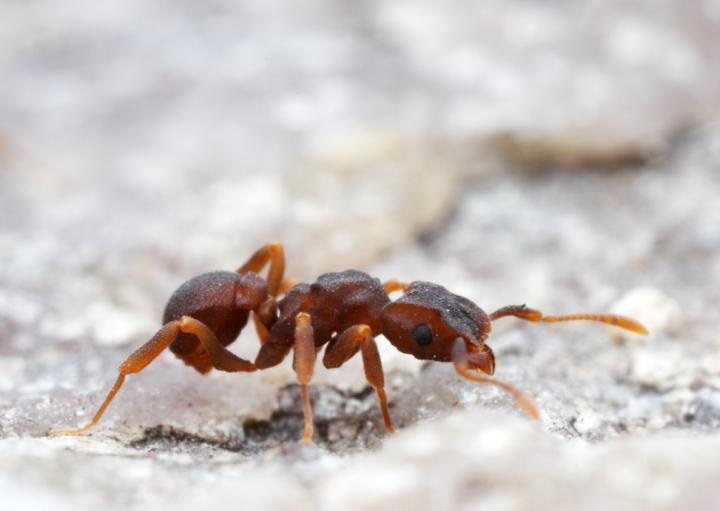
The researchers then tested several dozen promising microbe strains for their ability to fight infections in mice. Extracts from these microbes effectively killed both bacterial and fungal pathogens, and few demonstrated toxic side effects. As a further proof of concept, the team purified cyphomycin, a new antibiotic discovered in a Brazilian fungus-farming ant, and determined its chemical structure. Cyphomycin was able to treat infection in mice by Candida albicans, an opportunistic fungal pathogen that often infects immunocompromised people, and it also showed low toxicity in mice.
By demonstrating effective antimicrobial action and low toxicity in mice, the researchers have passed the first barrier to developing new antibiotics for clinical use in humans.
Image: This is a Cyphomyrmex ant. These fungus-growing ants harbored a microbe that made the newly discovered antibiotic cyphomycin. Image courtesy of Alec Wild.