Monash University researchers have unlocked a key process in all human cells that contributes to cancer, neurodegenerative diseases, and aging. The discovery reveals how cells efficiently get rid of cellular “junk,” which, when it accumulates, can trigger the health problems associated with getting older as well as death.
Autophagy is the “cleanup crew” of the cell—used to break down debris like broken proteins, bits of cell membrane, viruses, and bacteria. To capture the trash, cells use specialized membranes to trap the cargo for recycling into new parts and energy. Without efficient autophagy, cells become choked by their own damaged components—which can contribute to the development of a range of diseases, including diabetes, muscular dystrophy, Parkinson’s disease, and Alzheimer’s disease.
The laboratory of Michael Lazarou of Monash University today published data in Nature Communications that debunks previously held beliefs about how cells target their trash. Cells target different types of cargo by using autophagy receptors, which can bind the cargo as well as the ensnaring membranes. Until recently, these autophagy receptors were thought to recruit the membranes to the cargo, but the new research shows that this is not the case.
Search Antibodies Search Now Use our Antibody Search Tool to find the right antibody for your research. Filter
by Type, Application, Reactivity, Host, Clonality, Conjugate/Tag, and Isotype.
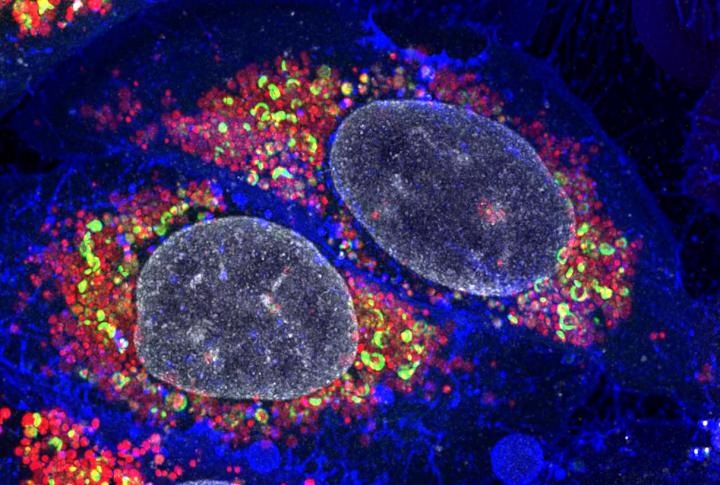
The team removed the ability of autophagy receptors to bind the membranes and found that this did not halt the autophagy process. In collaboration with Lan Nguyen, also of Monash University, the researchers have instead discovered how cells amplify the rate of autophagy.
“It totally flipped the way I used to think about it,” says first author Benjamin Padman. “The autophagy receptors weren’t recruiting the membranes, the membranes were recruiting more autophagy receptors to speed things up.”
According to Padman, there are a number of treatments and therapies currently under development globally which aim to control the activity of these proteins, which according to their findings, don't function the way that was previously thought.
“The cleanup crew of autophagy is always hard at work in our cells, but it can sometimes have trouble keeping up,” Padman says. “If we can find drugs that target this amplification mechanism, we could help neuronal cells deal with the buildup of protein trash linked to Huntington’s and Alzheimer’s.”
Image: Cells (blue - nucleus shown in white) are shown that are full of damaged mitochondria (red). Some of the damaged mitochondria have been targeted by the autophagy receptors (green), which accumulate faster through the process revealed in the paper. Image courtesy of Benjamin Padman at Monash Micro Imaging.