Most people have heard about antibiotic-resistant germs. But how about antibiotic-resistant dust?
According to researchers from Northwestern University, an antimicrobial chemical called triclosan is abundant in dust. The result is dust with organisms that could cause an antibiotic-resistant infection.
"There is this conventional wisdom that says everything that's in dust is dead, but that's not actually the case. There are things living in there," said assistant professor of environmental engineering Erica Hartmann, who led the study. "Dust is the final resting place of everything that's been circulating in the air, so it can give us information about air quality."
Hartmann's study, which was published today in mSystems, combined liquid chromatography-isotope dilution tandem mass spectrometry with metagenomic shotgun sequencing of dust collected from athletic facilities to characterize relationships between indoor antimicrobial chemicals and microbial communities. (Hartmann selected athletics facilities because people tend to make intimate contact with the floor, mats and equipment and use antimicrobial wipes to cleanse these areas before and after exercising.) Her team looked at the bacteria present in dust, specifically examining the bacteria's genes.
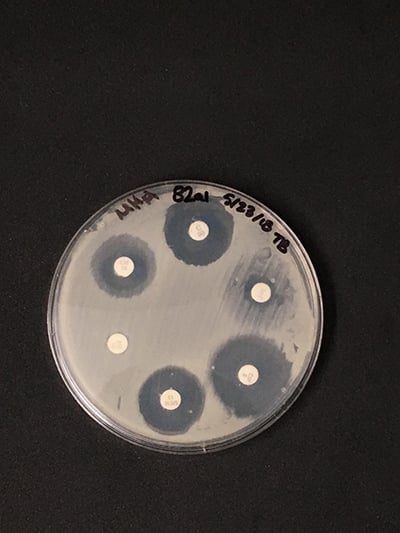 In dust with higher concentrations of triclosan, the researchers found higher abundances of genetic markers indicating antibiotic resistance. "Those genes do not code for resistance to triclosan," Hartmann clarified. "They code for resistance to medically relevant antibiotic drugs."
Up until 2017, manufacturers commonly added triclosan to antibacterial hand soaps and cleaning solutions. The FDA banned triclosan in 2016, after discovering several dangerous side effects, including its potential to interfere with the human endocrine system. But even though it is no longer contained in hand soaps and the antibacterial wipes that people often use at the gym, triclosan is still present in toothpaste and many consumer products that are not labeled.
"There are many products with triclosan that are not labeled because they are within the purview of the EPA instead of the FDA," Hartmann said. "These things might include antimicrobial gym equipment, such as yoga mats and textiles."
Hartmann believes we could ease the problem of antibiotic-resistant bugs by letting go of antimicrobial products. "The vast majority of microbes around us aren't bad and may even be good," she said. "Wipe down gym equipment with a towel. Wash your hands with plain soap and water. There is absolutely no reason to use antibacterial cleansers and hand soaps."
Image: A disc diffusion test, where each disc contains a different antibiotic. The discs covered in growing bacteria contain bacteria that are resistant to antibiotics. Image courtesy of Taylor Brown/Northwestern University.