Dogs could be trained to sniff out malaria in people, according to research being presented today at the American Society of Tropical Medicine and Hygiene Annual Meeting in New Orleans.
"While our findings are at an early stage, in principle we have shown that dogs could be trained to detect malaria infected people by their odor with a credible degree of accuracy,” reported principal investigator Professor Steve Lindsay from the department of biosciences at Durham University.
Researchers used nylon socks to collect foot odor samples from apparently healthy children aged 5 to 14 in the Upper River Region of The Gambia in West Africa. Using a simple finger-prick test the children were also screened to determine if they had the malaria parasite Plasmodium falciparum in their blood.
The sock samples were transported to the Medical Detection Dogs charity in Milton Keynes, UK where two dogs, a Labrador-Golden Retriever cross called Lexi and a Labrador called Sally, were trained to distinguish between the scent of children infected with malaria parasites and those who were uninfected.
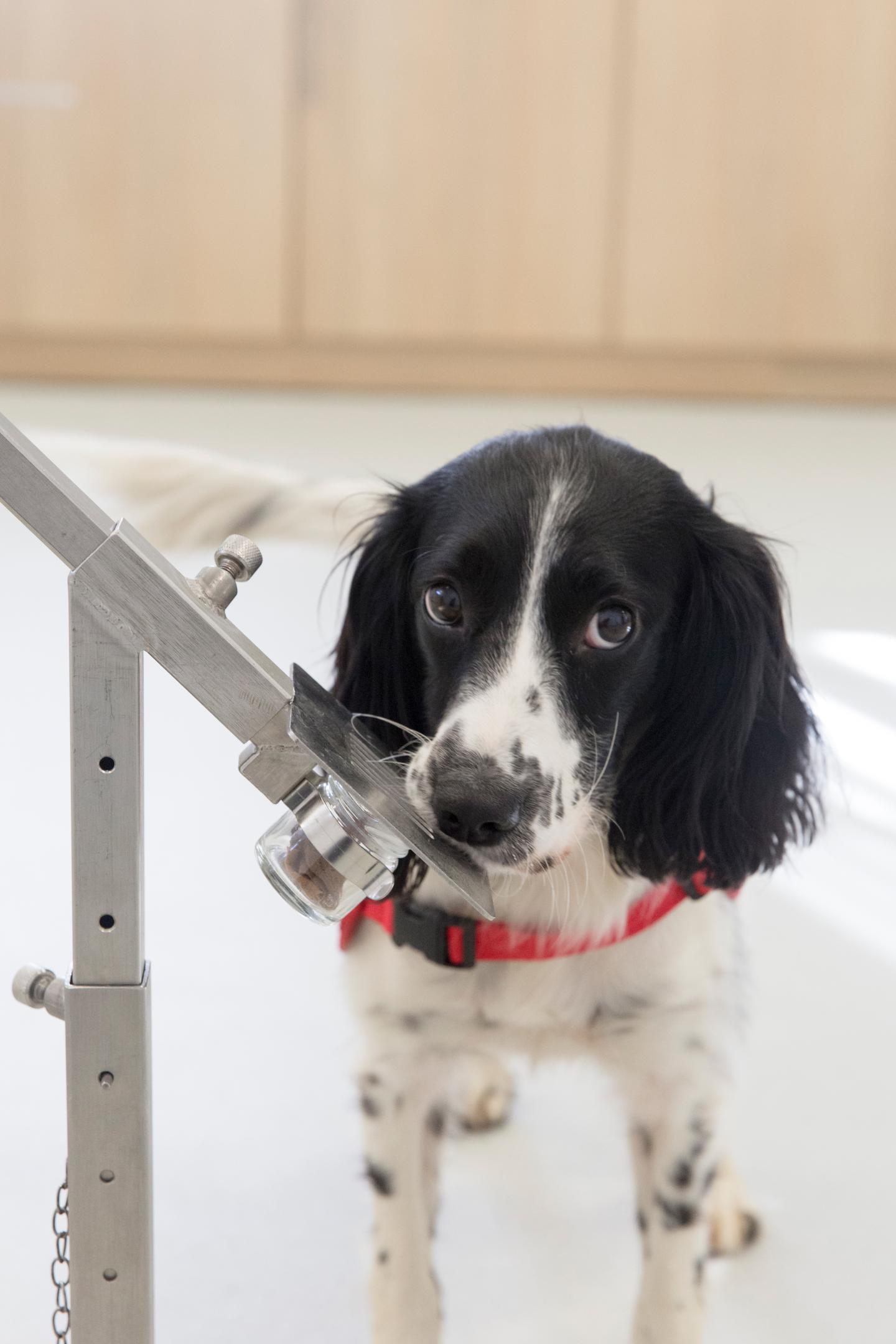
In total 175 sock samples were tested including those of all 30 malaria-positive children identified by the study and 145 from uninfected children. The dogs were able to correctly identify 70% of the malaria-infected samples. The dogs were also able to correctly identify 90% of the samples without malaria parasites.
Identifying people infected with the malaria parasite, but not presenting symptoms, is critical as they can be treated with antimalarial drugs and the spread of the disease can be prevented.
Sniffer dogs could provide a non-invasive, portable and rapid test for identifying malaria carriers and would be particularly useful in settings where there are few individuals with malaria parasites. Confirmation of the disease would then be made by taking a finger-prick sample of blood using a rapid diagnostic test following WHO guidelines.
Image: Freya is a Springer Spaniel who has been trained to sniff out the scent of malaria. Freya's highly sensitive nose could help provide the first non-invasive test for malaria. Sniffer dogs could potentially be deployed at ports of entry to identify passengers carrying malaria to prevent the spread of the disease across borders and to ensure people receive timely antimalarial treatment. Image courtesy of Medical Detection Dogs.