In a proof-of-concept study published today in Nature Biotechnology, a team of researchers at the University of Texas at Austin demonstrate a new method of protein sequencing that is much more sensitive than existing technology. The advance could have a major impact on biomedical research, making it easier to reveal new biomarkers for the diagnosis of cancer and other diseases, as well as enhance our understanding of how healthy cells function.
"We have created, essentially, a DNA-sequencing-like technology to study proteins," says senior author Edward Marcotte.
Work on this project began more than six years ago because Marcotte and colleagues envisioned adapting the methods of next generation gene sequencing (NGS) to protein sequencing. NGS is a set of techniques that have made sequencing the entire genome of any living organism fast, accurate, and affordable, accelerating biological research and enabling at-home genetic testing for ancestry and disease.
In the same way that these earlier advances provided quick and comprehensive information about thousands of genes that influence human health, the new technology provides rapid and comprehensive information about tens of thousands of proteins that play a role in health or disease. In many disorders—such as cancer, Alzheimer's, heart failure, and diabetes—cells produce proteins and other substances that act as unique biomarkers, akin to fingerprints. Better detection of these biomarkers would help researchers understand the causes of disorders or provide earlier, more accurate diagnoses for patients.
The current laboratory standard for sequencing proteins uses a tool called mass spectrometry. It is not sensitive for many applications; it can detect a protein only if there are about a million copies of it. It is also low throughput, meaning it can detect only a few thousand distinct protein types in a single sample.
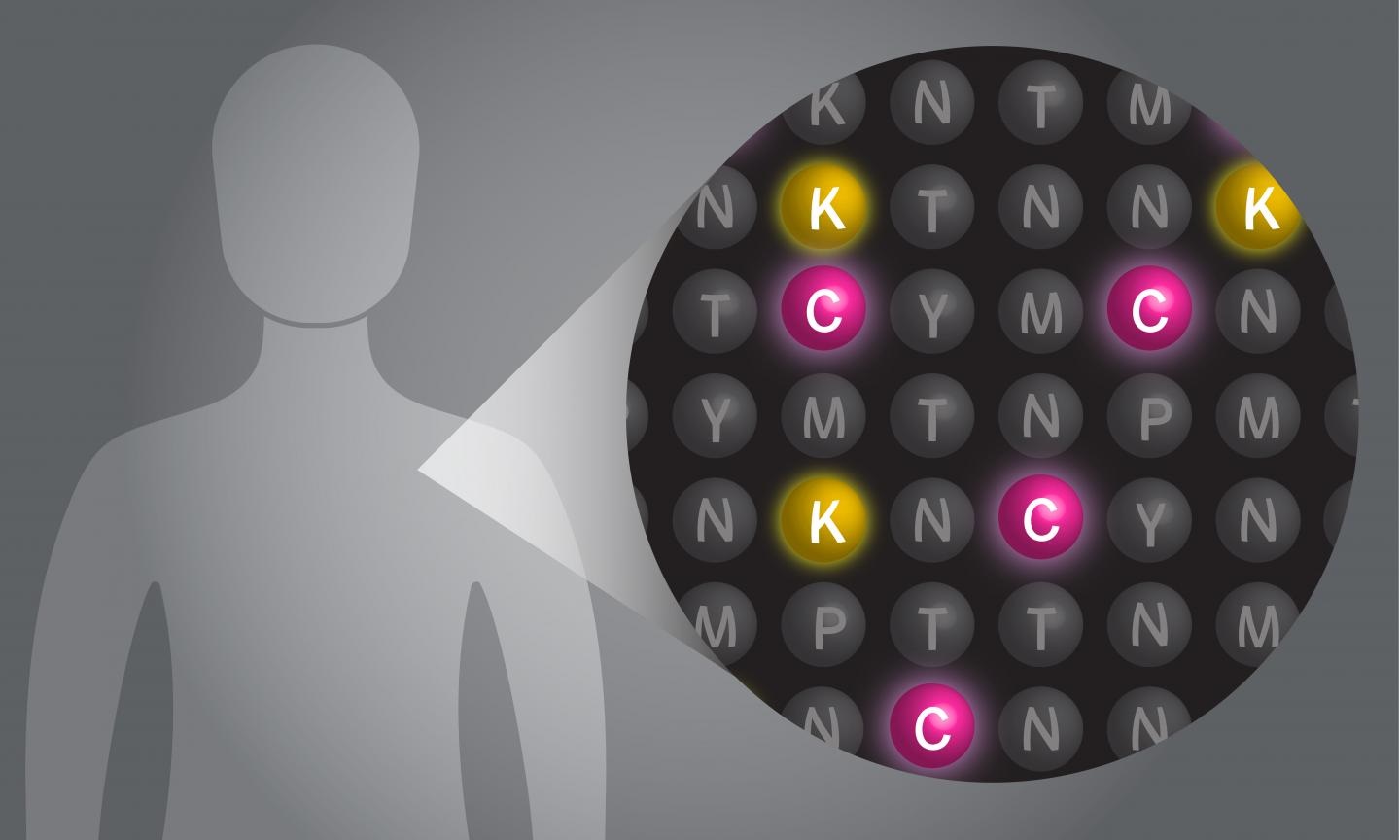
The new method, called single-molecule fluorosequencing, allows researchers to sequence millions of individual protein molecules simultaneously in a single sample. Marcotte believes that in the future this number could reach into the billions.
Image: An ultra-sensitive new method for identifying the series of amino acids in individual proteins (a.k.a. protein sequencing) can accelerate research on biomarkers for cancer and other diseases. Image courtesy of David Steadman/University of Texas at Austin.