A group of scientists report in Neurobiology of Learning that a group of large, triangular-shaped neurons in two almond-shaped structures on either side of our brain form cliques that help us enjoy the total food experience, from recognizing a banana to anticipating its taste and texture, correctly categorizing it as food and maybe even as breakfast food.
"Our knowledge is categorical," says Dr. Joe Z. Tsien, neuroscientist at the Medical College of Georgia at Augusta University. "You are not only creating a specific experience memory about a banana, but, almost like a library, you are putting those memories in categories like you would comic books or science fiction."
These structures, the amygdalae, are found deep inside the brain. They’re most widely associated with memory, processing emotions like survival and fear, and even libido. While examining the amygdalae’s neuronal response to fear, Tsien’s team decided to also look at their potential role in positive emotions like the food experience.
"It's the pyramidal cells that help distinguish a banana from a cake and put it in categories like breakfast or lunch," Tsien says. "They provide structural organization for knowledge from a specific food to a category of food to the general concept of food."
For these studies, the scientists looked at the neuronal responses of pyramidal cells, as well as the interneurons connected to them, in mice that were freely consuming biscuits, rice, milk, and water.
They found that the vast majority of pyramidal neurons increased their firing in response to just one food item, while others responded to varying combinations. Interneurons, on the other hand, seemed to focus on the broader food experience.
The food-focused cell assemblage that Tsien and his colleagues report is a fundamental organizational structure for the brain that reflects his Theory of Connectivity. The theory, first published in the journal Trends in Neurosciences in 2015, provides a basic algorithm that helps us understand how neurons line up in our brains to acquire and use knowledge about life experiences from food to friends. He and his colleagues subsequently identified 15 different cliques in the amygdalae involved in recognizing and categorizing the different foods consumed.
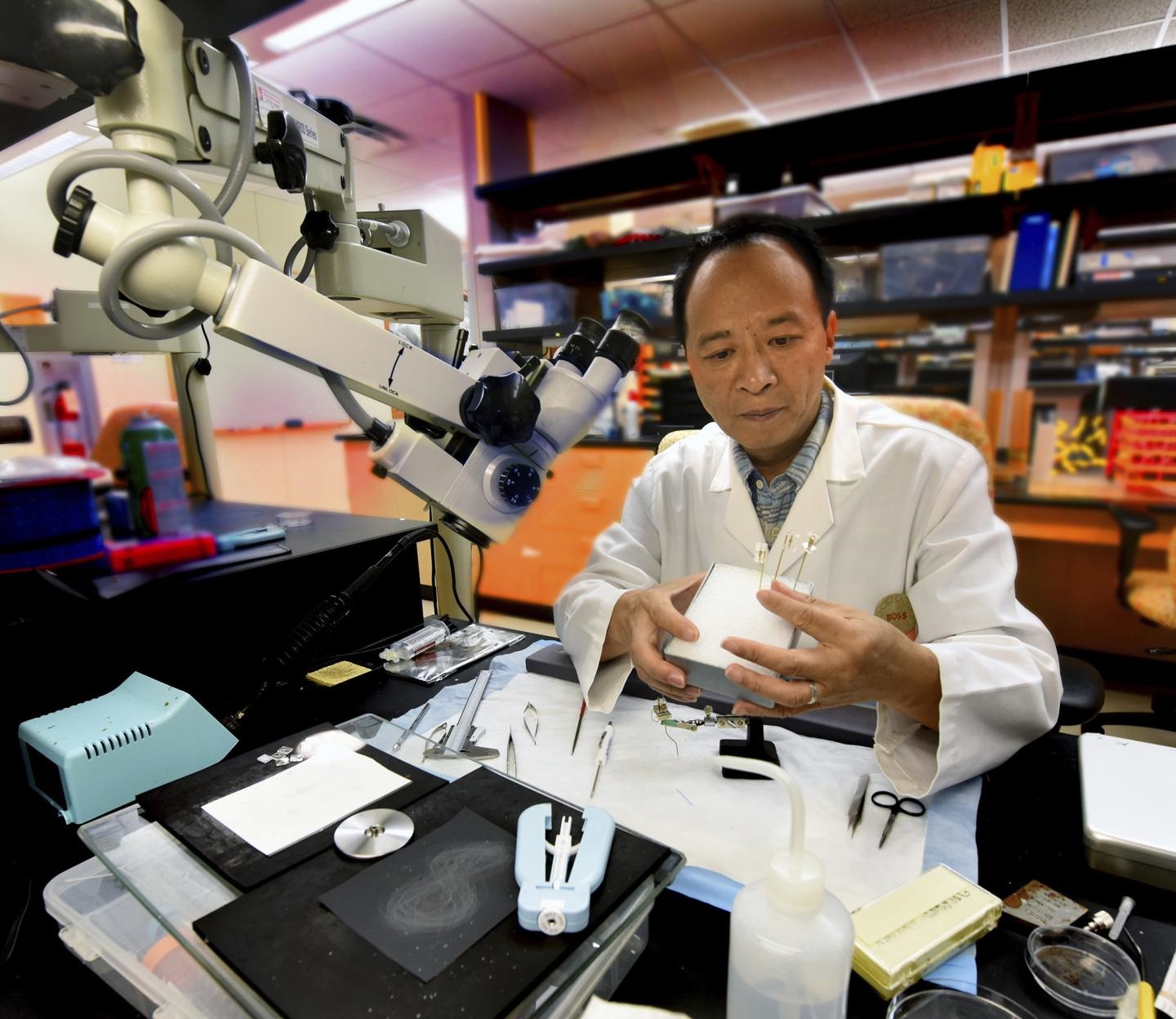
Image: Dr. Joe Z. Tsien identified the structural organization of pyramidal cells that respond to food in the amygdala, a structure better known for its involvement in fear, emotion, and memory. Image courtesy of Phil Jones, Senior Photographer, Augusta University.