A source of neutrophils, the most abundant immune cells, has been found. Researchers at La Jolla Institute for Allergy and Immunology identified a progenitor of neutrophils in the bone marrow of mice and humans and tied it to cancer-promoting activities. The findings could assist in the detection of cancers by serving as an early warning sign and drive new therapeutic and pharmaceutical approaches for the treatment of neutropenia, chronic inflammation, and cancer.
The study, published today in Cell Reports, found that neutrophil progenitors promote tumor growth and that the frequency of the usually rare cell increases dramatically in the blood of human melanoma patients.
"For many years, the cancer immunology field has been really focused on T cells, which led to the development of checkpoint blockade and CAR-T therapies but there's a whole other arm of the immune system that plays a role in tumorigenesis," says Catherine Hedrick, Ph.D., a professor in the division of inflammation biology, who led the current study. "We found that this particular subset of progenitor cells that promotes tumor growth and shows up in high numbers in melanoma patients. If our initial findings hold up across the board, a simple blood test could indicate if you have cancer or not."
Despite their abundance and importance, researchers had been unable to trace neutrophils' lineage to their origin in the bone marrow, where multipotent hematopoietic stem cells give rise to a series of increasingly specialized progenitor cells that eventually differentiate into their target cell types, including red blood cells, lymphocytes, and neutrophils.
"Over the years, people identified different white blood cell progenitors but the one that was missing was the neutrophil progenitor because we didn't have the tools to pull the populations apart," says postdoctoral researcher and the study's first author, Yanfang Peipei Zhu, Ph.D. "Now, we can study disease where neutrophils execute unique and important functions and investigate further how certain subsets of them promote tumor growth."
The successful search started with high-dimensional mass cytometry (or cytometry by time-of-flight (CyTOF). Immune cells are characterized by subtle differences in the expression of a multitude of markers. Each combination serves as a unique cellular ID that allows scientists to distinguish between different types of immune cells. CyTOF allowed Zhu to simultaneously analyze 39 surface markers known to pinpoint hematopoietic stem and progenitor cells, transient myeloid precursors, and terminally differentiated myeloid cells, especially granulocytes, the subset of immune cells neutrophils belong to.
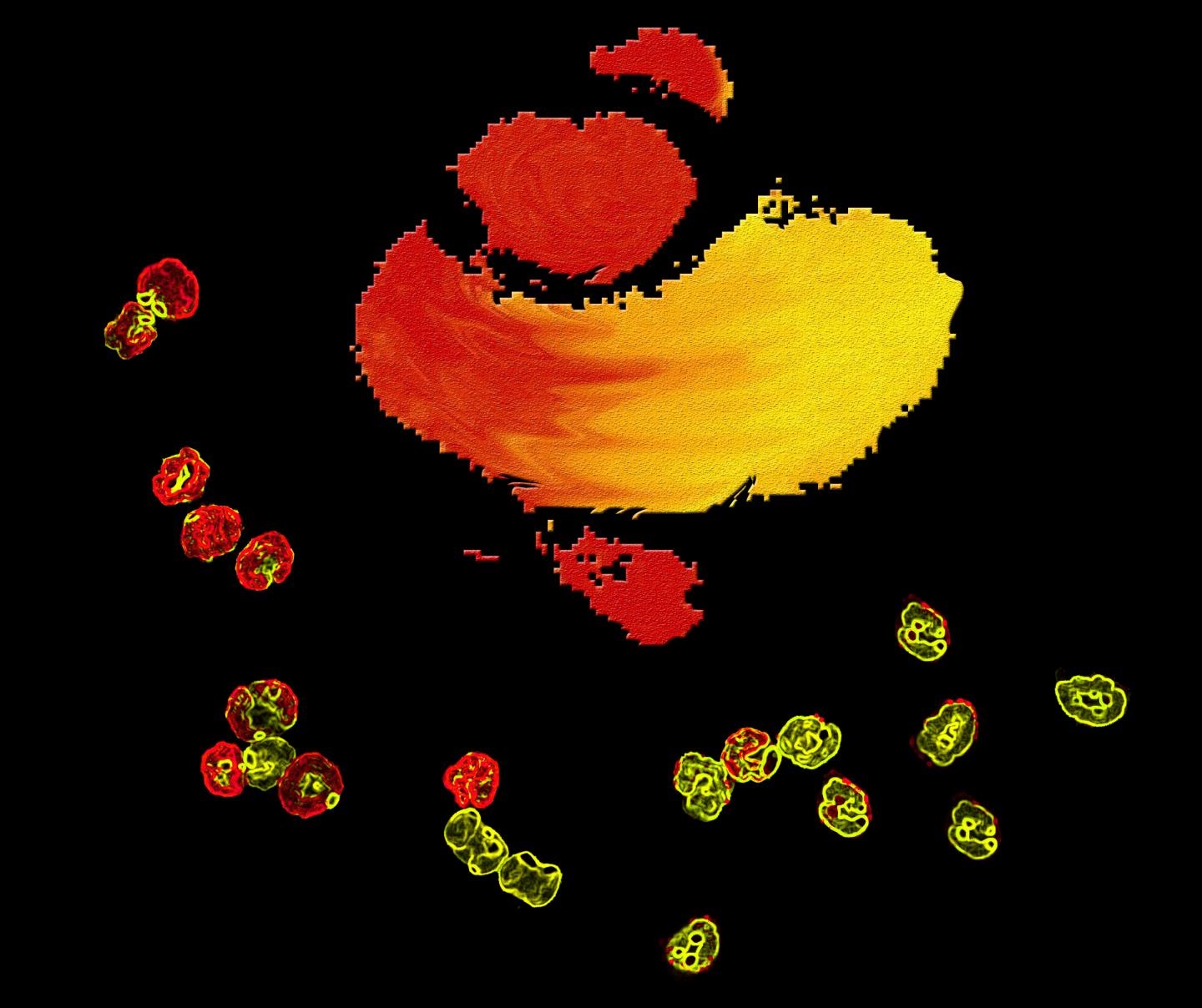
Image: The top left cells represent neutrophil progenitors and the right bottom ones are fully differentiated neutrophils. The color of nucleus matches the color on the viSNE map in the middle, where red indicates higher in the hematopoietic hierarchy and yellow indicates lower. Image courtesy of Dr. Yanfang Peipei Zhu, La Jolla Institute for Allergy and Immunology.