Researchers studying a specific class of non-coding RNA have discovered that the RNAs have a key role in cancer development and could lead to better targets for cancer-fighting drugs. Previous research had led to the discovery of these non-coding RNAs, known as eRNAs or enhancer RNAs, in colon cancer cells, which prompted the team to question whether they had a functional role in the cell. The team’s findings are recently published in Nature Structural and Molecular Biology.
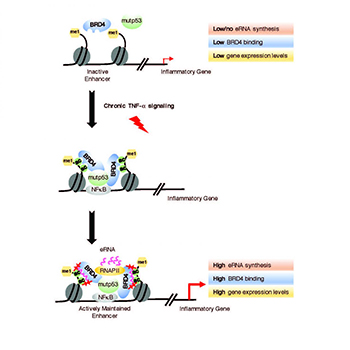
Using biochemical and biophysical methods, the researchers showed that eRNAs interact directly with BRD4, a protein known to facilitate the spread of cancer. BRD4 is the target of several small molecule drugs, known as BET inhibitors, that are currently in clinical trials. Experiments specifically demonstrated that eRNAs help BRD4 to stay bound to DNA, which keeps cancer promoting genes activated for longer periods of time. The research team also showed that knocking out eRNAs significantly reduces expression of these cancer promoting genes, demonstrating that eRNAs work together with BRD4 to co-regulate cancer gene regulation.
 "Taken together, our findings are consistent with the emerging notion that eRNAs are functional molecules, rather than merely reflections of enhancer activation or simply transcriptional noise... So this is going to transform the way that we think about 'junk RNA' and the regulation of gene expression in the context of the human cell,” says Assistant Professor Shannon Lauberth, whose lab conducted the study.
Knowing how eRNAs impact BRD4 function, the team believes there may be better ways to therapeutically target BRD4. The next step in their lab is to further understand the mechanism of eRNA function in the cell and to identify methods to target and inhibit eRNA activity.
Image: UC San Diego biologists found that active enhancer RNAs (eRNAs) directly interact with BRD4, a protein linked to tumor development. Image coutesy of Lauberth lab, UC San Diego.