A group of scientists at Texas Biomedical Research Institute have zeroed in on a new defense against HIV-1. Led by Ruth Ruprecht, M.D., Ph.D., the team used an animal model to show that immunoglobulin M (IgM) was effective in preventing infection after mucosal AIDS virus exposure.
"IgM is sort of the forgotten antibody," Dr. Ruprecht, scientist and director of Texas Biomed's AIDS Research Program, said. "Most scientists believed its protective effect was too short-lived to be leveraged as any kind of protective shield against an invading pathogen like HIV-1."
For the study, which was published last week in AIDS, the team first treated animals with a man-made version of IgM, which is naturally produced by plasma cells located under the epithelium. Half an hour later, the same animals were exposed to SHIV (simian-human immunodeficiency virus). Four out of the six animals treated this way were fully protected against the virus. The animals were monitored for 82 days.
Dr. Ruprecht's team found that applying the IgM antibodies resulted in immune exclusion. IgM clumped up the virus, preventing it from crossing the mucosal barrier and spreading to the rest of the body.
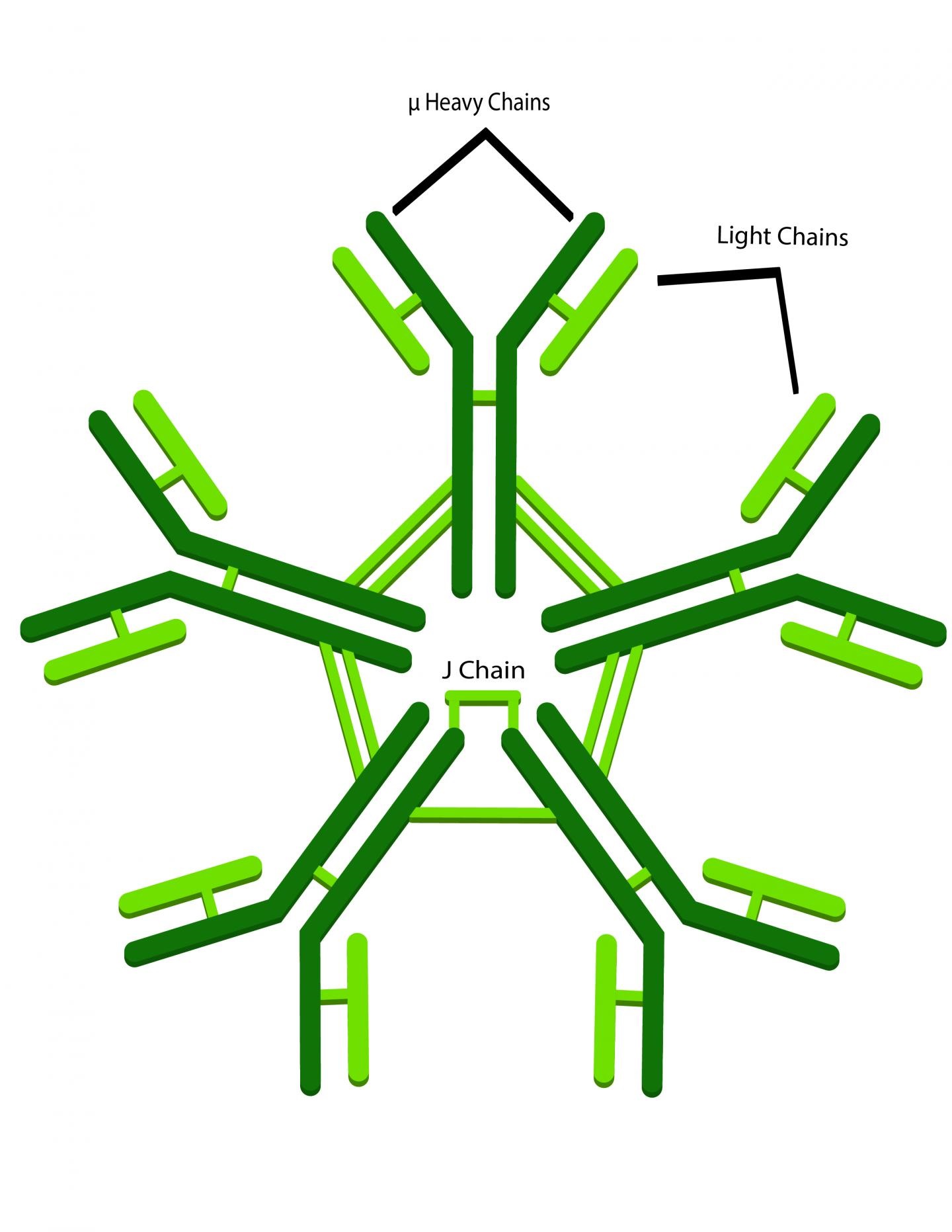
IgM has a high affinity for its antigens and "grabs them very quickly and does not let go," Dr. Ruprecht explained. "Our study reveals for the first time the protective potential of mucosal anti-HIV-1 IgM. IgM has a five-times higher ability to bind to virus particles compared to the standard antibody form called IgG. It basically opens up a new area of research. IgM can do more than it has been given credit."
Image: The IgM antibody has multiple arms to catch the virus, making it more efficient in clumping up the virus and keeping it from passing through the mucosal barrier and entering the rest of the body. Image courtesy of Chris Wager.