Human cGAS is one of the cells’ most critical sentinels and is considered a “first-responder” protein. It was discovered in 2012, but the structural and functional differences in human cGAS that set it apart from cGAS in other mammals and underlie its unique function in people had not been identified until now. A report published today in Cell, by a team from Harvard Medical School and Dana-Farber Cancer Institute, outlines the protein's structural features that explain why and how human cGAS senses certain types of DNA, while ignoring others.
"The structure and mechanism of action of human cGAS have been critical missing pieces in immunology and cancer biology," said senior investigator Philip Kranzusch, assistant professor of microbiology and immunobiology. "Our findings detailing the molecular makeup and function of human cGAS close this critical gap in our knowledge."
Importantly, the findings can inform the design of small-molecule drugs tailored to the unique structural features of the human protein—an advance that promises to boost the precision cGAS-modulating drugs that are currently in development as cancer therapies.
"Several promising experimental immune therapies currently in development are derived from the structure of mouse cGAS, which harbors key structural differences with human cGAS," Kranzusch added. "Our discovery should help refine these experimental therapies and spark the design of new ones. It will pave the way toward structure-guided design of drugs that modulate the activity of this fundamental protein."
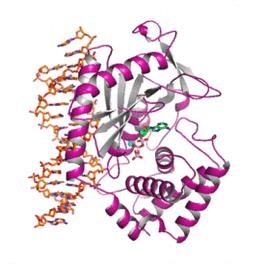
The team's findings explain a unique feature of the human protein—its capacity to be highly selective in detecting certain types of DNA and its propensity to get activated far more sparingly, compared with the cGAS protein in other animals. Specifically, the research shows that human cGAS harbors mutations that make it exquisitely sensitive to long lengths of DNA but render it "blind" or "insensitive" to short DNA fragments.
"Human cGAS is a highly discriminating protein that has evolved enhanced specificity toward DNA," said co-first author Aaron Whiteley, a postdoctoral researcher in the department of microbiology and immunobiology. "Our experiments reveal what underlies this capability."
Image: Scientists have deciphered the structural and functional differences of a critical human protein that guards against cancer and bacterial and viral infections. The findings explain what sets the human form of the protein apart from this of other mammals. Image courtesy of Wen Zhou, Harvard Medical School.