Why CRISPR gene editing sometimes fails to work, and how the process can be made much more efficient are explained in an article published in Molecular Cell last week.
In the study, the researchers from University of Illinois at Chicago showed that when gene editing using CRISPR fails, which occurs about 15% of the time, it is often due to persistent binding of the Cas9 protein to the DNA at the cut site, which blocks the DNA repair enzymes from accessing the cut.
"We found that at sites where Cas9 was a 'dud' it stayed bound to the DNA strand and prevented the cell from initiating the repair process," senior author Bradley Merrill, associate professor of biochemistry and molecular genetics, said. The stuck Cas9 is also unable to go on to make additional cuts in DNA, thus limiting the efficiency of CRISPR, he added.
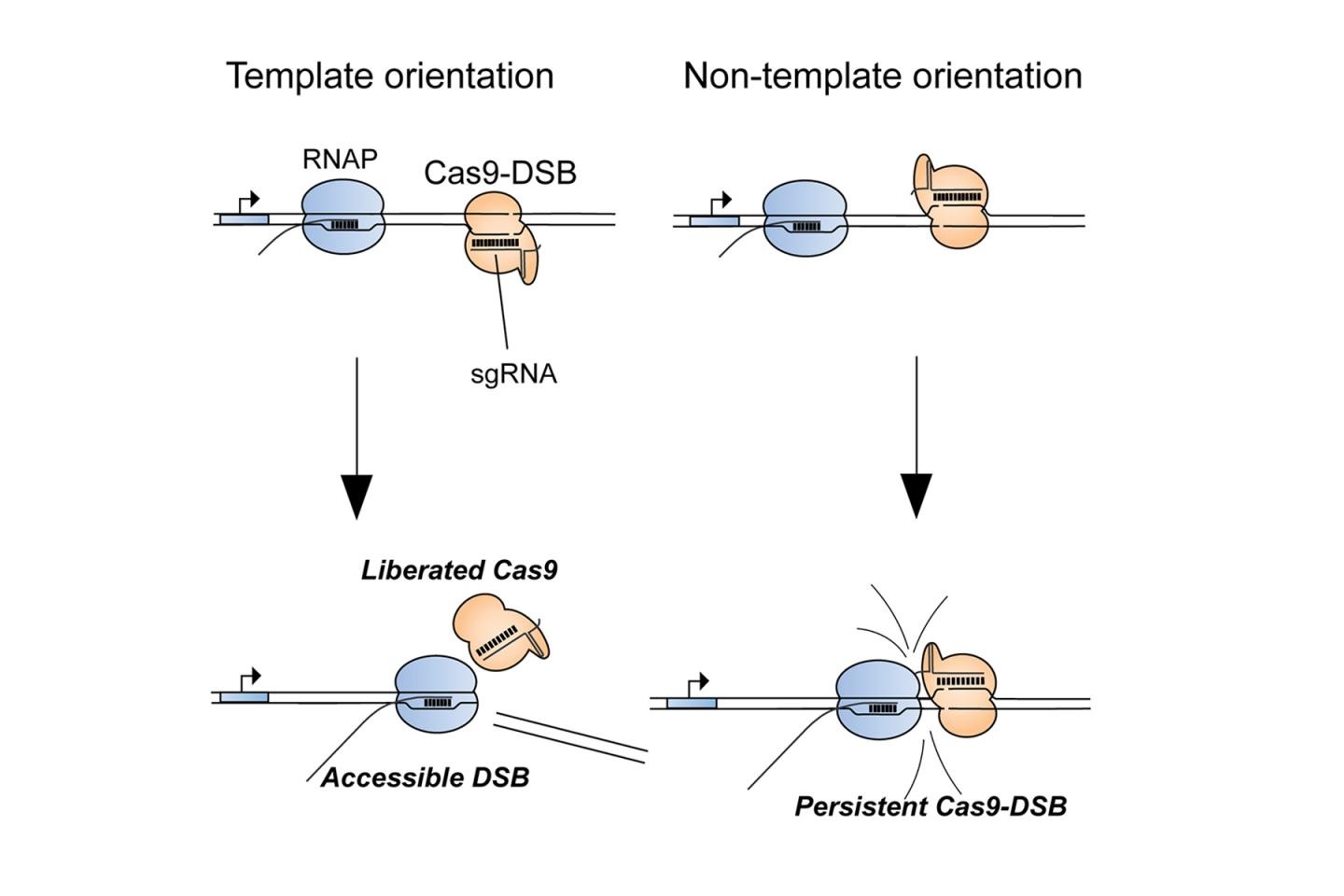
Merrill, UIC graduate student Ryan Clarke, and their colleagues also found that Cas9 was likely to be ineffective at sites in the genome where RNA polymerases were not active. Further investigation revealed that guiding Cas9 to anneal to just one of the strands making up the DNA double helix promoted interaction between Cas9 and the RNA polymerase, helping to transform a "dud" Cas9 into an efficient genome editor.
Specifically, they found that consistent strand selection for Cas9 during genome editing forced the RNA polymerases to collide with Cas9 in such a way that Cas9 was knocked off the DNA.
"I was shocked that simply choosing one DNA strand over the other had such a powerful effect on genome editing," said Clarke, the lead author of the paper. "Uncovering the mechanism behind this phenomenon helps us better understand how Cas9 interactions with the genome can cause some editing attempts to fail and that, when designing a genome editing experiment, we can use that understanding to our benefit."
The study findings are also significant because, in the genome editing process, the interaction between Cas9 and the DNA strand is now known to be the "rate-limiting step," said Merrill. This means that it is the slowest part of the process; therefore, changes at this stage have the most potential to impact the overall duration of genome editing.
"If we can reduce the time that Cas9 interacts with the DNA strand, which we now know how to do with an RNA polymerase, we can use less of the enzyme and limit exposure," Merrill said. "This means we have more potential to limit adverse effects or side effects, which is vital for future therapies that may impact human patients."
Image: UIC researchers show persistent Cas9 binding to a double-strand break causes CRISPR genome editing to fail about 15% of the time. When RNA polymerases collide with Cas9 from one direction (template orientation), they can dislodge Cas9 and increase genome editing efficiency. Image courtesy of Ryan Clarke, et al.