The number of T cells in a tumor often determines its sensitivity to immunotherapy, those with an abundance of T cells—dubbed “hot” tumors—are often considered to be more sensitive, but so far it has remained unclear why. A new study probing the role of heterogeneity in cancer cells now suggests the amount of T cells is determined by information embedded in the cancer cells. These findings, published in Immunity could help oncologists create tailored treatments for a patient’s tumor composition.
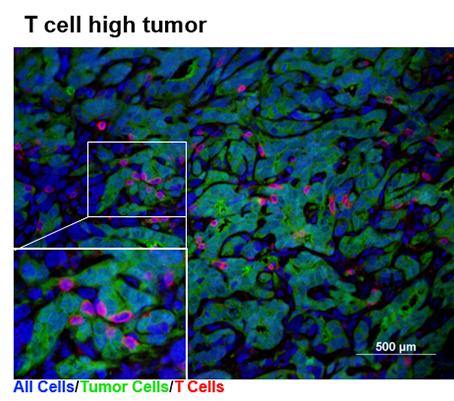
The Penn Medicine Abramson Cancer Center (ACC) team that worked on the study were seeking to better understand the underlying biology of the tumor environment in a pancreatic cancer model. One way that tumor cells can differ is the way in which they avoid the immune system in order to grow unchecked. This can either be by developing a “cold” tumor—one with few T cells—and the other is to grow as a hot tumor that exhausts T cells, protecting tumor cells from destruction by the patient’s immune system.
To study this phenomenon, the team created a library of pancreatic tumor cell lines from a mouse model of pancreatic adenocarcinoma. When implanted into normal, healthy mice, the tumors grew into both hot and cold tumors, with cold tumors being most prevalent. When administered immunotherapy, the mice responded differently depending on the tumor type. Of the 26 mice with hot tumors and treated with a combination of chemo- and immunotherapy, 20 survived more than six months. None of those with cold tumors cleared their cancer this treatment.
The team found that cold tumor cells make a compound called CXCL1, which signals myeloid cells to enter tumors and T cells to stay away, making them insensitive to immunotherapy. Knocking out CXCL1 in cold tumors increased T cell infiltration and heightened sensitivity to immunotherapy.
In the future, such tumor cell lines could help medical professionals identify therapies for specific subsets of patients with various stages of tumor heterogeneity.
Image: This is a 'hot' T cell high tumor. Image courtesy of Ben Stanger, Katelyn Byrne, Perelman School of Medicine.