A team of researchers from Baylor College of Medicine and MD Anderson Cancer Center in Texas has developed a potential new drug for treating asthma. Preclinical studies published in the Journal of Biological Chemistry have tested the small molecule PM-431, which targets a key protein in the asthma-causing signaling pathway.
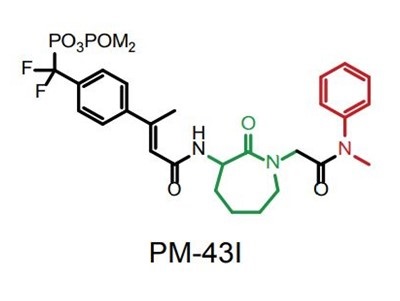 An asthma attack is triggered when environmental allergens activate immune cells, recruiting them to the lungs. This can lead to a strong IgE antibody response as well as secretion of pro-inflammatory cytokines. In the case of asthma, the cytokines IL-4 and IL-13 are known to activate the transcription factor STAT6, which drives gene expression leading to the asthmatic symptom of exaggerated airway constriction.
"To activate STAT6, IL-4 and IL-13 bind to their corresponding receptors on immune cells. These receptors share a critical subunit called IL4R-alpha that activates STAT6. However, additional research from our lab has shown that completely different receptors can also activate STAT6. So, we focused our efforts on developing a small-molecule that would bind to and inhibit STAT6 activity directly," said study first co-author J. Morgan Knight.
To accomplish this, the team sought to develop and test an inhibitor that targets key domains in the mouse and human STAT6. The team had built upon previous work in which they developed multiple peptidomimetic compounds designed to block the docking of STAT6 to a key receptor. As a result, they had produced a new lead compound, PM-431, that successfully targeted STAT6.
“Conducting initial dose range, toxicity, and pharmacokinetic experiments with PM-43I, we found that it potently inhibits both STAT5- and STAT6- dependent allergic airway disease in mice,” the team reports. Pharmacokinetic quantification of the drug in tissue samples was conducted using HPLC coupled to mass spectrometry (LC-MS).
The team concludes that PM-43I represents the first of a class of small molecules that may be suitable for further clinical development against asthma.
Image: Chemical structure of small molecule PM-43I. Image courtesy of D. Corry and JBC.