According to a new paper published in EMBO Reports, blood stem cells have a compensation mechanism for maintaining a balance of B cell and T cell production. For example, if a B cell-producing stem cell is under-producing B cells then a stem cell that is slated to produce only T cells will pick up the slack in order to maintain adequate levels of both immune cell types. The researchers studied hematopoietic stem cells (HSCs) in mice transplantation experiments and their findings show how HSCs coordinate to maintain the overall blood supply. This innate compensation mechanism could be utilized to potentially improve the prognosis and treatment of many diseases.
 The team applied unique molecular tags to blood stem cell clones in mouse bone marrow which were passed on to the stem cell progeny, either a B cell or a T cell. The researchers performed bone marrow transplantations in mice with these tagged cells where each mouse received normal stem cells and deficient stem cells that were genetically engineered to not produce B cells, T cells, or both types of immune cells. Their findings showed that when normal B-producing cells were transplanted with deficient ones, the normal ones compensated by producing more B cells. When transplanted with both deficient B and T-producing stem cells, the normal ones again overcompensated by producing both immune cell types in order maintain a balanced blood supply.
In addition, the results showed that a few specific blood stem cells were picking up most of the slack by dramatically ramping up their proliferation in order to cover for the underproducing cells. The team identified specific changes in their gene activity that provided the ability to enhance their production.
"These stem cells' ability to compensate provides some degree of resilience to disruptions of the blood and immune system--such as the aging process, the early stages of many blood cancers and disorders, and bone transplantation," said Lu, an assistant professor of stem cell biology and regenerative medicine at USC. "By understanding and ultimately harnessing this innate capacity of stem cells, we can potentially optimize treatments for a wide range of diseases."
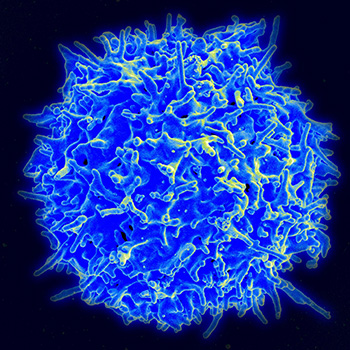
Image: A healthy T cell, courtesy of National Institute of Allergy and Infectious Diseases.