A team led by researchers from the University of Massachusetts Amherst has found that a common antimicrobial found in toothpaste, hand soaps and more could have adverse effects on colonic inflammation and colon cancer. Their work was published in yesterday in Science.
"These results, for the first time, suggest that triclosan could have adverse effects on gut health," says senior author Guodong Zhang.
"Because this compound is so widely used, our study suggests that there is an urgent need to further evaluate the impact of triclosan exposure on gut health in preparation for the potential establishment of further regulatory policies," says co-first author Haixia Yang.
The team tested the effect of triclosan on colonic inflammation and colon cancer using several different mouse models. In all their mouse models, they found that triclosan promoted colonic inflammation and colon tumorigenesis.
"In particular, we used a genetically engineered mouse model which develops spontaneous inflammatory bowel disease or IBD. Also, treatment with triclosan significantly increased disease development of IBD in the mice, suggesting that IBD patients may need to reduce exposure to this compound," says co-author Hang Xiao.
In their experiments, their sequencing data showed that feeding triclosan to mice reduced the diversity and changed the composition of the gut microbiome, which was a result that was also found in human studies.
In additional tests, they looked at triclosan's effect in a germ-free mouse where there is no gut microbiome and in a mouse model where Toll-like receptor 4 signaling, a mechanism important for host-microbiota communication, was blocked. In both cases, they saw that triclosan had no effect. "This is strong evidence that gut microbiota is required for the biological effects of triclosan" Zhang points out.
 An editorial note from the journal says, "Triclosan exposure is practically unavoidable in the United States, but little is known how ingestion may affect our health." Though limited to mouse models, "this work suggests that the effects of triclosan on human health should be examined more closely," editors noted.
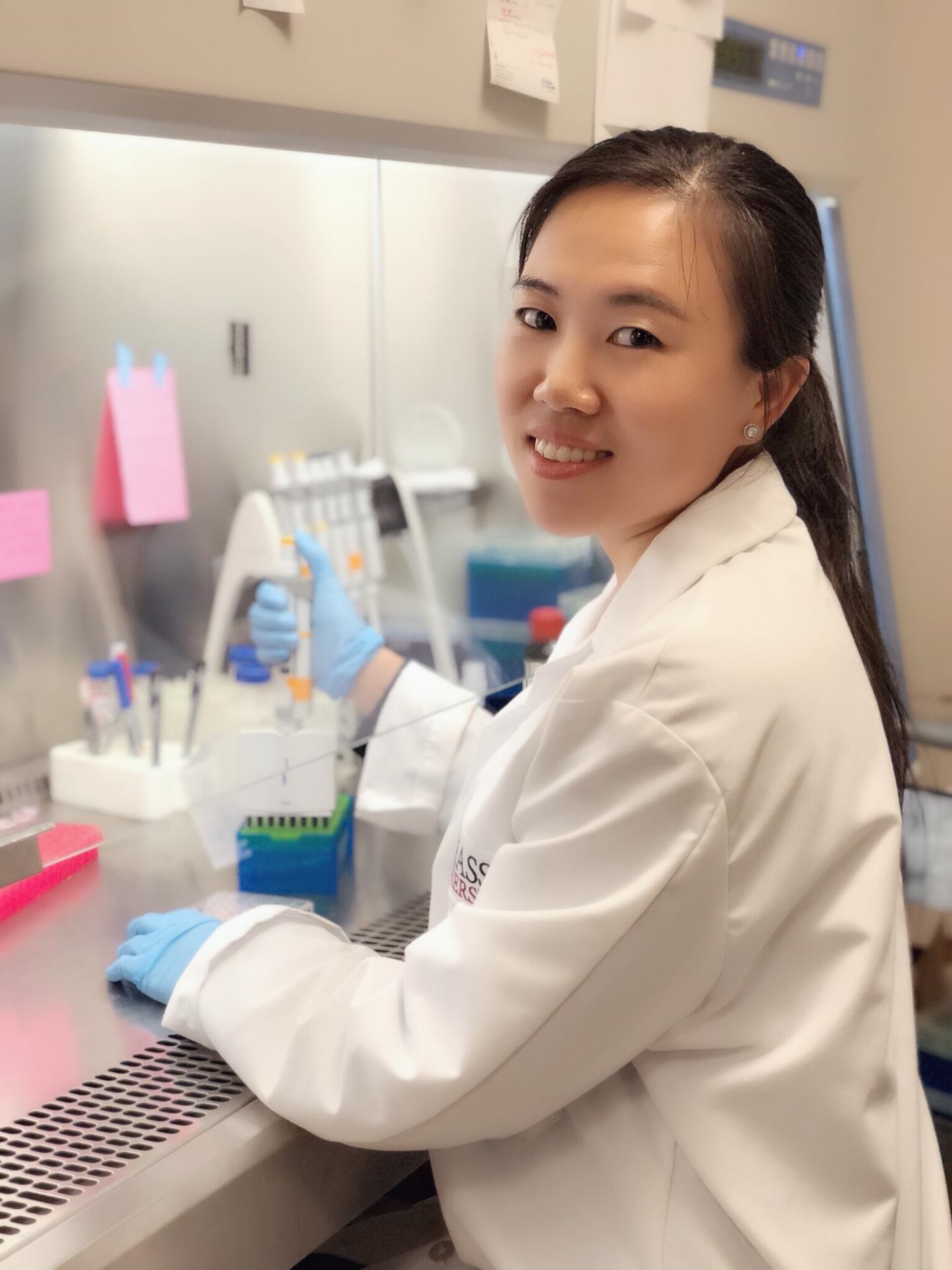
Image: Co-first author Haixia Yang and colleagues at UMass Amherst report results in mice suggesting that the antimicrobial ingredient triclosan, found in hand soaps and toothpaste among other products, could have adverse effects on colonic inflammation. Image courtesy of UMass Amherst.