Genetic studies of individuals with a malformation syndrome similar to DiGeorge syndrome have uncovered that rare variants of a transcriptional regulator gene are most likely the cause of a new multisystem malformation disorder. A research team identified three members of one family and a fourth non-related individual that all shared many of the same clinical features. The team determined that all four carried rare missense variants of the TBX2 gene. The findings are published in Human Molecular Genetics.
Whole genome sequencing on the three family members was performed which revealed the rare missense variant, p.R20Q, in the TBX2 gene. TBX2 is a member of a family of transcription factor genes that have critical roles in early-stage development of many organs and body parts including the heart, limbs, digits, and brain regions. It is known that variations in 12 of the 17 genes in this family cause an array of multi-organ development syndromes. The team used GeneMatcher, an online resource, to locate the fourth individual with similar physical attributes as the other three people and determined that they had a different mutation in the TBX2 gene. Experiments showed that the TBX2 mutation resulted in a reduction in TBX2 protein. This protein is needed to suppress the expression of other genes.
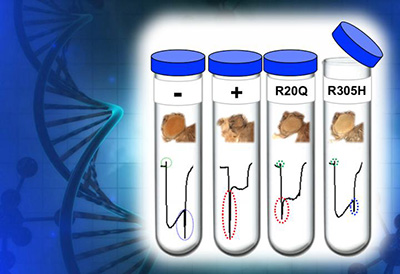 In order to determine the functional consequence of the TBX2 missense mutation, which are mutations that change a single amino acid or protein, the team used fruit flies as ‘living test tubes’ to test how the variations impacted various biological processes and pathways. By conducting morphological and functional assays that did not appear to be related to the disorder, the research team discovered a link between physical abnormalities and the underperforming TBX2 gene.
"The human and fly circulatory and immune systems are structurally different, and flies do not have an endoskeleton system. Therefore, in this study, instead of using fruit flies to model the symptoms found in patients, we used flies as a rapid diagnostic tool to test whether the functional differences in TBX2 we found in cells in the laboratory had biological significance in a live animal," said Dr. Shinya Yamamoto, leader of the study.
In vivo studies in the fruit flies showed that the TBX2 variants impacted the fly’s eye development, retinal function, and lifespan. "This study provides a blueprint of how fruit flies can be used as a rapid screening tool to identify potentially pathogenic human genes," Yamamoto said.
Image: The fruit fly is a laboratory animal model that works as a 'living test tube' in which researchers can test the roles genes might play in human conditions. Image coutesy of S. Yamamoto/Baylor College of Medicine.