In the course of studying schizophrenia, collective findings have linked hundreds of genes that may play a role. However, these have yet to converge on a definitive understanding that can be confidently used for precise experimental modeling. From single-cell transcriptomics work, a team of collaborators has now identified distinct cell types that underlie this long-term mental disorder. The published findings in Nature Genetics come from various institutions, including the Karolinska Institutet in Sweden, the University of North Carolina, and the Psychiatric Genomics Consortium.
 "Understanding which cell types are affected in a disease is of critical importance for developing new medicines to improve their treatment. If we do not know what causes a disorder we cannot study how to treat it," says study first co-author Nathan Skene.
The team sought to map genomic loci implicated in schizophrenia onto specific brain cell types. From RNA sequencing analyses, they found that such regions were consistently associated with these cell types: pyramidal cells, medium spiny neurons (MSNs) and certain interneurons. Each of these cell types originates in distinct areas of the brain.
In addition, the team found that diverse gene sets associated with schizophrenia also generally associated with the same cell types. These genes include those involved in synaptic function, as well as those coding for mRNA that interact with the fragile X mental retardation protein and antipsychotic targets. Based on these findings, the team suggests that different cell types have biologically distinct roles in schizophrenia.
"One question now is whether these brain cell types are related to the clinical features of schizophrenia. For example, greater dysfunction in one cell type could make treatment response less likely. Dysfunction in a different cell type could increase the chances of long-term cognitive effects. This would have important implications for development of new treatments, as separate drugs may be required for each cell type involved," says senior co-author Patrick Sullivan.
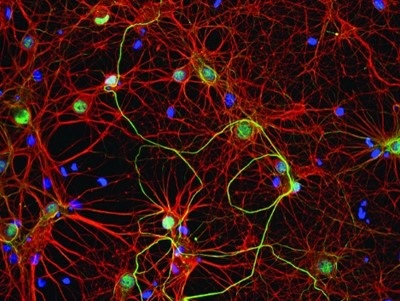
Image: Primary culture of hippocampal neurons. Image courtesy of GE Healthcare Flickr.