Amyotrophic lateral sclerosis (ALS), also known as motor neurone disease (MND), is a neurodegenerative disorder that progresses from the death of the upper and lower motor neurons. One known genetic cause stems from mutations in the enzyme superoxide dismutase-1 (SOD1). Immature and unstable SOD1 forms toxic oligomers and large insoluble aggregates within motor system cells. In new findings published in Nature Communications, a team finds that the drug ebselen can help stabilize SOD1 and may serve as a potential therapeutic. The work comes from a University of Liverpool-led team of researchers.
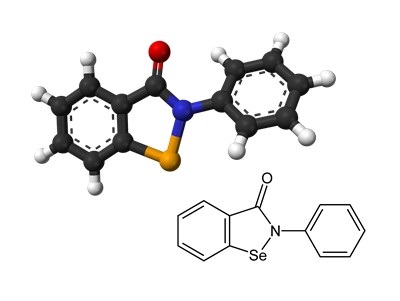 First discovered in the 1980s, ebselen is an organoselenium synthetic small molecule with broad antioxidant properties. It also features close pharmacological and structural similarities to a drug that was recently licensed for the treatment of ALS, edavorone. Using crystallography, mass-spectrometry and in-cell NMR technologies, the team was able to investigate how ebselen interacts and benefits the stability of SOD1.
Ebselen was found to direct the correct folding of SOD1 by reacting with the cysteine residues within the protein’s internal disulfide bonds. As a result, ebselen can effectively restore important steps in SOD1 assembly including folding, dimerization and zinc binding. Ultimately, this leads to a reduction of the globally unfolded SOD1 aggregates that cause toxicity among the motor neurons. The team concludes that ebselen would make for a bifunctional pharmaceutical with qualities both as a SOD1 chaperone and also as edaravone.
"This discovery has the potential to prevent the accumulation of SOD1 into the large aggregates we see within the motor neurons of affected individuals. If we can stop that, we might be able to stop the neurons dying," said study first co-author Gareth Wright.
"The next step is to test ebselen in settings more accurately resembling human neuronal cells and optimising it so that it can become useful as a drug for motor neuron disease,” adds senior co-author Samar Hasnain.
Image: The molecular structure of the small molecule ebselen. Image courtesy of Wikimedia Commons.