Hematopoietic stem cells (HSCs), which give rise to the various blood cell types, are regulated by the Hox family of transcription factors. Abnormal expression of Hox leads to the development of leukemia. New findings published in Cell Stem Cell have determined that epigenetic methylation on a key genetic region can determine whether blood will develop normally or progress to leukemia. The work comes from a team led by researchers from Stowers Institute for Medical Research.
"It's like we found a general control that simultaneously turns the lights on and off in many rooms, rather than having a single switch that controls each individual room," said study senior co-author Linheng Li.
Through transcriptome and DNA methylome analyses, the team found that Hoxb and retinoid signaling genes were predominantly expressed in HSCs. The expression of the Hox was primarily controlled by non-coding cis-regulatory DNA segment, which the team called DERARE, or distal element RARE (retinoic acid response element). RAREs are known elements that are driven by retinoic acid signaling to mediate transcription of Hox genes.
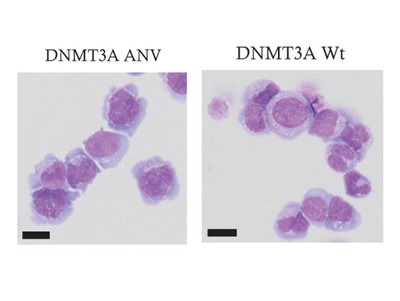 In further experiments, the team found that deletion of DERARE led to decreased Hoxb expression, subsequently changing the blood types differentiating from HSCs. On the other hand, turning on DERARE permitted Hox gene expression and increased the progression of leukemia.
The team also found that DNA methyltransferases mediate DNA methylation on DERARE, which leads to reduced Hox expression. Patients with acute myeloid leukemia with mutations in the methyltransferase DNMT3A had DERARE that were vastly non-methylated and exhibited higher Hoxb levels. To see what happens when DERARE was methylated, the team used CRISPR-Cas9 to restore methyltransferase function.
"In two human AML cell lines carrying a DNMT3A mutation, we used an adaptation of genome editing technology called dCas9-DNMT3A to specifically increase the DNA methylation on DERARE. This targeted methylation technique was able to reduce Hoxbcluster expression and alleviate the progression of leukemia," explained first author Pengxu Qian.
The team concluded that DERARE maintains normal hematopoiesis and prevents acute myeloid leukemia (AML) by regulating Hoxb cluster genes in a methylation-dependent manner.
Qian adds: “Our work provides mechanistic insights into the use of DNA methylation on the DERARE as a potential screening tool for therapeutic drugs that target DNMT3A-mutated AML, thus leading to the development of new drugs for treating AML, in which DNA methylation is abnormal."
Image: Wright-Giemsa staining of human leukemia cells treated with targeted DERARE methylation (DNMT3A Wt, right) show more maturation than control-treated cells (DNMT3A ANV, left). Image courtesy of Linheng Li Lab.