Astrocytes are highly abundant cells that support neurons within the central nervous system. Abnormal hyperactivity of these cells is believed to be an important contributor to neuronal-glial network dysfunction in Alzheimer’s disease. New studies in mice now show that blocking a key receptor can normalize astrocyte signaling to restore neural network dysfunction. Published today in the Journal of Experimental Medicine, the work comes from a team at the German Center for Neurodegenerative Diseases.
 “Astrocytes support brain function and shape the communication between neurons, called synaptic transmission, by releasing a variety of messenger proteins. They also provide metabolic and structural support and contribute to the regulation of blood flow in the brain,” said study first author Nicole Reichenbach.
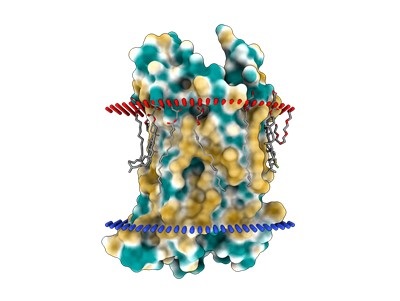
The team targeted a key protein primarily expressed by astrocytes, a G-protein coupled receptor known as P2Y1R. In previous work, activation of P2Y1R has been shown to trigger cellular hyperactivity in mouse models of Alzheimer's. This time around, the team tested the deactivation of the receptor by treating mice for several weeks with different P2Y1R antagonists.
Through observations using in vivo two-photon microscopy, the team found that inhibition resulted in “augmented structural synaptic integrity and preserved hippocampal long-term potentiation.” They also found reduced dystrophic neurite burden and greater plaque compaction. The team concluded that treatment with P2Y1R inhibitors restores neural network homeostasis, and may function as a novel treatment for Alzheimer’s disease.
"We found that long-term treatment with these drugs normalized the brain's network activity. Furthermore, the mice's learning ability and memory greatly improved. On the other hand, in a control group of wild type mice this treatment had no significant effect on astrocyte activity. This indicates that P2Y1R inhibition acts quite specifically,” explained Gabor Petzold, senior co-author of the study. He adds, “This is an experimental study that is currently not directly applicable to human patients. However, our results suggest that astrocytes, as important safeguards of neuronal health and normal network function, may hold the potential for novel treatment options in Alzheimer's disease.”
Image: Structure of human P2Y1R. Image courtesy of Zhang, D. and RSCB PDB. DOI: 10.1038/nature14287.