The Zika virus has risen into recent international spotlight when a Brazilian outbreak plagued the region with microcephaly and other birth defects. Studies have since shown that the virus targets neural progenitor stem cells in early development. In a seemingly righteous turn of events, Brazilian researchers have now managed to turn the Zika virus into a potential treatment against brain cancer. The published work in Cancer Research comes from a University of São Paulo's Bioscience Institute-led team.
"Our results suggest Zika has an even greater affinity with central nervous system tumor cells than with healthy neural stem cells,” said senior co-author Oswaldo Okamoto. "When it infects tumor cells, it swiftly destroys them.”
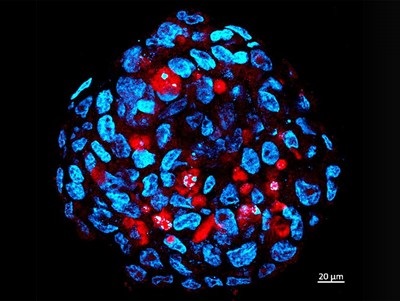 In dose escalation experiments, the team added increasingly higher amounts of Zika virus to the cultured CNS tumor cells, as well as other tumor types. Through methods such as immunofluorescence, the team determined that the virus was particularly selective for CNS tumors. Following up with comparisons between tumor stem cells and normal brain stem cells, the virus remained preferential to cancer.
"We observed that small amounts of Zika were sufficient to infect CNS tumor cells. They also infected the prostate cancer cells, but far fewer,” said Okamoto. “We infected both [tumor and normal] cell types in vitro and found tumor stem cells to be even more susceptible to destruction by Zika than healthy neural stem cells.”
In an in vivo mouse model, immunocompromised mice were xenografted with human CNS tumors. The cancer spread to other areas of the brain and into the spinal cord, mimicking advanced stage human cancer. The team then injected a small dose of Zika virus into the mice brains. As a result, they found significantly longer survival, decreased tumors and fewer metastases. They even observed a complete remission in some animals, with tumors being completely eliminated even from metastasized areas in the spinal cord.
"All these results taken together suggest that various kinds of aggressive CNS tumors can be treated with some kind of approach involving Zika in future. First of all, however, we need to investigate more profoundly which tumor types respond to this oncolytic effect, what are the benefits of this treatment, and what are the side-effects of exposure to the virus," cautioned Okamoto.
"We're excited about the possibility of testing the treatment in human patients, and we're already discussing this with oncologists,” said senior co-author Mayana Zatz. “We've also applied for a patent for the therapeutic protocol used in rodents.”
Image: Tumor sphere comprised of human medulloblastoma stemcells infected by Zika (red). Image courtesy of HUG-CELL.