Egyptian rousette bats (Rousettus aegyptiacus), have been identified as a host for Marburg virus, a member of the filovirus family along with Ebola virus. By looking closely at the fruit bat genome, a team of scientists identified evidence suggesting that the bats have a mechanism of tolerating viral infections instead of fighting them, as the primate immune system does. The study findings, published in Cell, could lead to development of therapeutics against Marburg and other filovirus infectious, which are lethal.
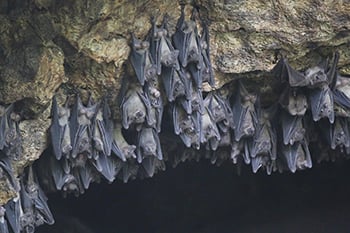 To begin the study, the research team extracted DNA from Egyptian rousette bats obtained from a known colony in Uganda. They sequenced, assembled, and analyzed the bat genome and identified differences between antiviral immunity genes in humans and bats. The researchers discovered that the bats have a much larger and diverse pool of natural killer (NK) cell receptors, MHC class I genes, and type I interferons than in humans. The findings show that bats have a higher threshold of activation of part of the immune system which allows the bats to tolerate the virus instead of fighting to remove it.
"Further evaluation of these expanded sets of genes suggests that other key components of the immune system like the MHC- and the IFN-loci in bats may have evolved toward a state of immune tolerance," said Mariano Sanchez-Lockhart, Ph.D., of USAMRIID.
This initial work focused on understanding the bat model and generating antibodies which will be used to further characterize the bat’s unique immune system. The next step is to advance the understanding of the differences between bat and human antiviral immune response with the ultimate goal of developing therapeutics to treat viral infections in humans.