About 33% of us carry Staphylococcus aureus (S. aureus), or "staph." However, most people don't get sick from it. New findings from a team led by University of Washington School of Medicine researchers have found that the immune system generates nitric oxide (NO), which inhibits S. aureus from becoming virulent and attacking the body. The work was published yesterday in Cell Host & Microbe.
"At a time when antibiotic resistance is on the rise, immune molecules that target virulence factors could be used to develop new therapeutics," lead author Rodolfo Urbano said.
According to Urbano, most microbe growth is under the control of NO. However, S. aureus is one bacteria that can grow even with the presence of NO.
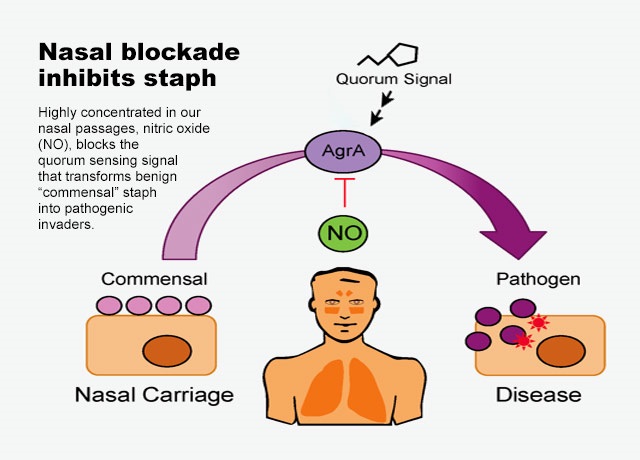
So the researchers performed a screen to identify all the proteins in S. aureus that were modified and kept in check by NO. They found a number of proteins that were modified, but the protein AgrA caught the team's attention as it played an important part in causing S. aureus to become virulent.
The switching from benign to virulent process is known as a quorum and occurs when bacteria reach a particular density. When AgrA is modified, NO was able to block the quorum-sensing system.
To confirm this finding, researchers used a mouse model with staphylococcal pneumonia that also lacked the gene needed to generate NO. They were able to see that the animals developed a more severe disease when they lacked NO, showing that NO was capable of suppressing the production of toxins during an infection.
Senior author Ferric Fang said that most bacteria evolve to resist the effects of NO, but not S. aureus. "One could speculate that the arrangement is actually advantageous to the bacterium," Fang said. "The bacterium doesn't want to make its host sick. It prefers to just colonize the host, grow, and spread to other people. If the staph colonizing me makes me sick and I die, that doesn't help the staph."
 "We know that one of the most dangerous things that can happen to you when you get the flu is that you can develop a staph infection. We would like to know whether the flu disrupts the normal balance between staph and the host and whether it has something to do with NO," said Fang.
Image: The molecule nitric oxide helps stop staph bacteria from transforming into invasive pathogens. Image courtesy of Rodolfo Urbano.