A research team has developed a new method using polyester chemistry and caffeine to synthesize a biocompatible polymer gel that has the potential to be used for drug delivery and other applications. The study, led by teams and MIT and Brigham and Women’s Hospital, was published in Biomaterials.
"Most synthetic approaches for synthesizing and cross-linking polymeric gels and other materials use catalysts or conditions that can damage sensitive substances such as biologic drugs. In contrast, here we used green chemistry and common food ingredients," says Robert Langer, the David H. Koch Institute Professor at MIT and one of the study's senior authors. "We believe these new materials could be useful in creating new medical devices and drug delivery systems."
The experiments showed that two antimalarial drugs could be successfully loaded into the gels. The material could make a variety of drugs chewable or easier to ingest than traditional pills making the new vehicle appealing to individuals who have difficulty swallowing.
With the goal of using a “green” materials in the manufacturing of polymer gels, the team identified caffeine as a catalyst since it is plant-derived and safe to ingest. The chemical structure, a weak base, is similar to other molecules that have been used to catalyze the formation of ester bonds to create polyesters.
"Polyesters allow for the intentional design of ingestible materials made from bioderived resources," DiCiccio says. "However, there didn't exist any catalysts that were mild enough to enchain these molecules without causing unwanted reactions or requiring super high heat. Our new platform provides an elegant solution to this problem using inexpensive materials and broadly accessible chemistries."
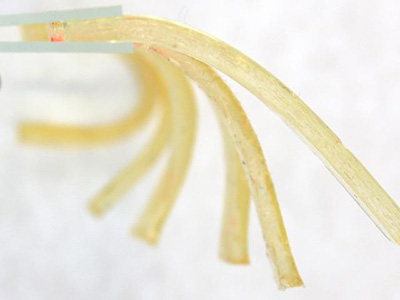 The reaction uses caffeine to induce citric acid, another plant-based component, to create a polymer and polyethylene glycol (PEG) mixture. PEG is a biocompatible ingredient commonly used in drugs and consumer products. In the case of the MIT experiments two malaria drugs, artesunate and piperaquine, were included in the reaction and became incorporated into the polymer chains.
"Depending on what the application may be, or what drugs are being incorporated, you could mix and match to find an optimal mixture," Traverso says.
The researchers also demonstrated that the surfaces of the gels could be altered to control the speed of which the polymers move through the digestive tract which could impact drug absorption rate. The final product yielded the amount of caffeine found in one cup of tea which produced no harmful effects on four types of human cells in rat model experiments.