A new study revealed that house dust exposure has an impact innate immune cell populations in young children and can protect them from developing asthma as they get older. The study was a component of a larger multi-year NIH-funded study that looked for potential biomarkers to predict asthma by following 560 families in urban areas who were identified as high risk for developing the chronic inflammatory disease. 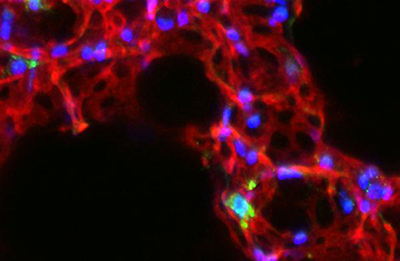 The findings were published in the Journal of Immunology.
Of interest to the researchers were particular cell types of the innate immune system— Mucosal-associated invariant T cells (MAIT) and invariant natural killer cells (iNKT). The innate immune response reacts immediately to foreign invaders, such as microbes, while the adaptive immune response can take a few days to respond to a single antigen.
The team collected house dust samples and measured immune cell populations in blood samples from 110 one year-old infant study participants to determine whether any factors correlated with an increase of asthma at age seven. "We found certain immune signatures such as having more MAITs that are protective," says Shilpi Chandra, co-first author of the paper. "In humans MAIT cells are unique in that they are borne to make gamma interferon, which could help skew the immune system toward an asthma-protective Th1 immune response."
The iNKT levels did not directly correlate to increased asthma risk but the team found that iNKT cell antigenic content in the house dust samples could be linked to an increase in the disease. "iNKT activity reflects a home environment with increased microbe exposure and therefore protection from asthma," says Shilpi.
Image: The frequency and activity of convential T cells serves as an early childhood immune signature that predicts the development of asthma later on. iNKT cells are shown in green, lung vasculature in red and cell nuclei in blue. Image courtesy of Dr. Catherine Crosby, La Jolla Institute for Allergy and Immunology.