In a new study from Stanford University, researchers injected mice with inactivated induced pluripotent stem cells (iPSCs) and were able to induce a potent immune response against breast, lung, and skin cancers. The vaccine also prevented relapses in animals that had tumors removed. The work was published in Cell Stem Cell yesterday.
In this study, researchers treated 75 mice with iPSCs that were inactivated by irradiation. Within four weeks, 70 percent of the animals rejected newly introduced breast cancer cells and the other 30 percent had smaller tumors. The researchers also found that the vaccine worked for lung and skin cancers as well.
Joseph C. Wu, the lead author, and colleagues found that many of the antigens on the iPSCs were also seen on the cancer cells. So when the mice were vaccinated, their immune systems were introduced to cancer antigens and then able to build an immune response against cancer. The iPSCs seemed to "prime their immune systems to eradicate tumor cells," Wu says.
A huge challenge with cancer immunotherapies is that only a limited number of antigens can be presented to the immune system at a time. In this study, the researchers used an animal's own cells to create the vaccine that targets multiple tumor antigens at the same time. By using whole iPSCs, the researchers were able to eliminate the need to find the most optimal antigen to target for a particular type of cancer.
"We present the immune system with a larger number of tumor antigens found in iPSCs, which makes our approach less susceptible to immune evasion by cancer cells," Wu says. To boost their vaccine, the researchers also added CpG, a bacterial DNA immunity booster that has been declared safe in human trials.
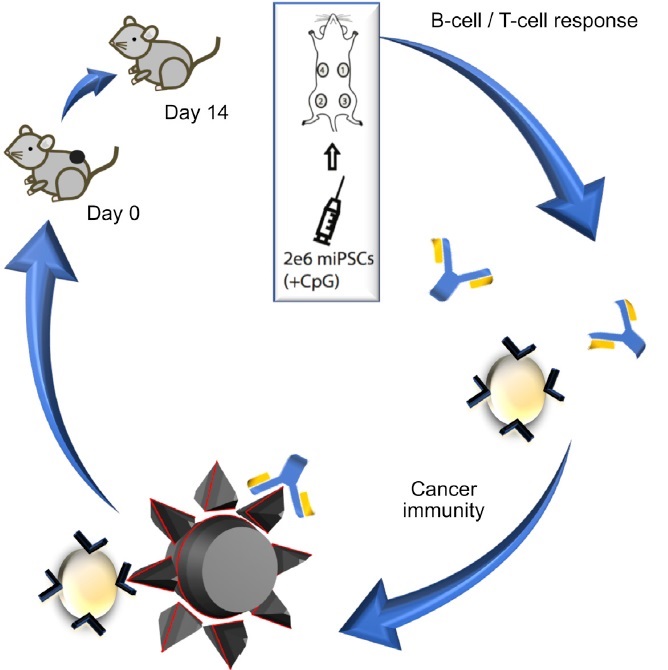 The researchers believe that in the future a patient's skin or blood cells could be re-programmed into iPSCs and administered as a vaccine after surgery, chemotherapy, or radiation therapy.
"What surprised us most was the effectiveness of the iPSC vaccine in re-activating the immune system to target cancer," Wu says. "This approach may have clinical potential to prevent tumor recurrence or target distant metastases."
Image: Depiction of how cancer immunity against multiple types of cancer can be achieved using an easily generable iPSC-based cancer vaccine. This immunity is based on overlapping epitopes between iPSCs and cancer cells and can also be achieved by reactivating the immune system as an adjuvant. Image courtesy of Kooreman and Kim et al./Cell Stem Cell.