A new study from researchers at the University of Pennsylvania has found that young adults with a thinner brain cortex are more likely to make an impulsive decision than ones with a thicker cortex. The work was published recently in the Journal of Neuroscience.
Earlier studies have shown that cortical thickness was associated with a preference for small, immediate rewards over larger, delayed rewards. So in this study, Marieta Pehlivanova, Joseph Kable, Theodore Satterthwaite and colleagues wanted to find out if the relationship between cortical thickness and reward preference held true for teens since they are typically experiencing many structural brain changes at this age.
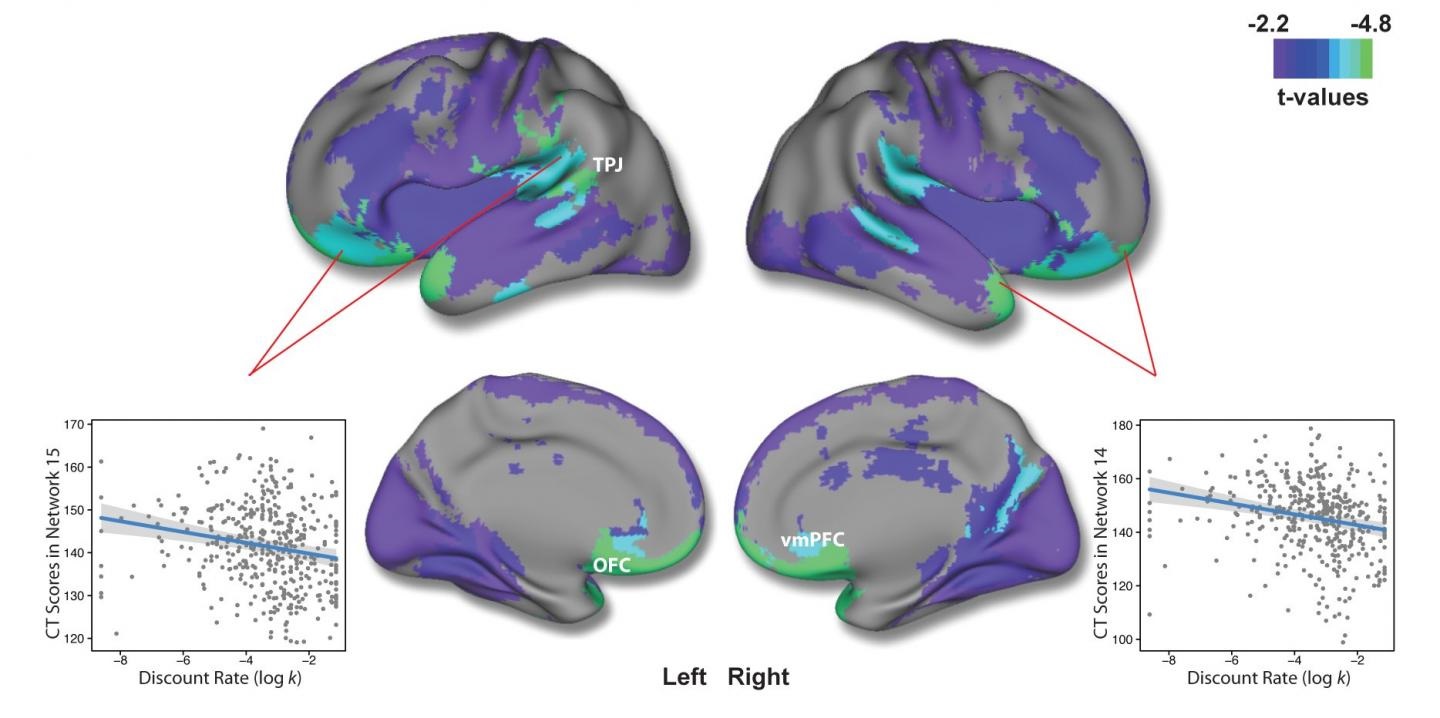 The researchers looked at behavioral and neuroimaging data collected from 427 boys and girls that preferred the small, immediate rewards over larger, delayed rewards. They found that the thickness of 19 structural brain networks correlated with the degree of delay discounting. The data even showed that cortical thickness predicted teens' delay discounting above and beyond cognitive and demographic variables, such as mother's level of education.
Image: Lower cortical thickness is associated with impulsive choice in specific brain networks that are important for decision-making. Image courtesy of Pehlivanova et al.