A research team has developed a platform to systematically engineer bacteriophages to be used more effectively in fighting bacterial infections and diagnosing diseases. The study describing a novel technology platform enabling researchers to quickly engineer phages and give them additional functionality is published in PNAS.
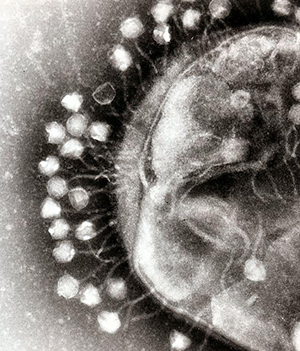 Bacteriophages, commonly known as phages, are viruses that target and kill a specific bacteria. They can be powerful tools for biotechnology and diagnostics, and their specificity makes them excellent candidates for fighting certain bacterial infections, especially with the rise of antibiotic resistance. However, Gram-positive bacteria have been particularly difficult to infect since they have thick cell walls and phage editing tools are currently challenging to use and limited in effectiveness.
The new technology involves assembling the desired parts of the bacteriophage using DNA fragments and including new functionality such as an enzyme to help dissolve cell walls. This ground up engineering process also enables researchers to remove certain phage features including the ability to integrate into host genomes. The newly constructed phage is then reactivated from its DNA elements by introducing it into a cell-wall deficient form of Listeria bacteria, L-form Listeria. The bacteria uses its own machinery to produce the viable phage and the virus is then purified for downstream applications.
"A key prerequisite for using effective synthetic bacteriophages is that their genome is unable to integrate into the host's genome," says Samuel Kilcher, a specialist in molecular virology. If this happens, the virus no longer presents a threat to the bacterium. Using this new method, however, the scientists were able to simply reprogram such integrative phages so that they become interesting again for antibacterial applications.
The research team has applied for a patent for their straightforward and robust phage gene editing technology. The next step is to partner with biotechnology companies that have an interest in phage therapy and diagnostics.
Image: Bacteriophage infecting a bacterial cell. Image courtesy of Dr. Graham Beards.