A recent research study found that two distinct bacterial species, Escherichia coli and Bacteroides fragilis (ETBF), work together to foster development of colon cancer. Both species were found in an inherited form and non-inherited type of the disease. The findings in this study were published in Science. Another study, published concurrently, found that ETBF promotes tumor formation through IL-17 and Stat3 signaling in epithelial cells. The results of this work is explained in Cell & Host Microbe.
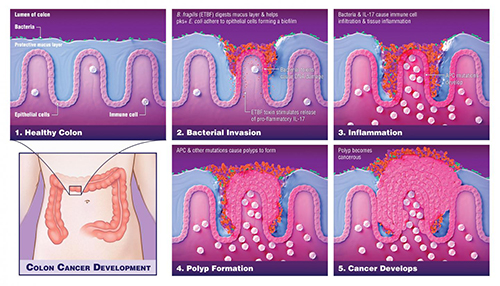
The Science study identified how these bacteria overcome the protective mucus barrier around the colon and work together to form a sticky layer, known as a biofilm, on top of the colon epithelial cells. The bacterial microenvironment causes chronic inflammation, DNA damage, and eventually tumor formation. The research team proposes that these bacterial colonies eventually influence the epithelial cells to become cancerous. To investigate this theory, the research team analyzed colon tissue from six colon cancer patients. Using gene probes, they identified that the bacteria on the biofilms were primarily Bacteroides fragilis (ETBF) and Escherichia coli, which was surprising since the colon harbors over 500 types of bacteria. Toxins from each of these two types of bacteria are known to be oncogenic.
 "It is the combination of these effects, requiring coexistence of these two bacteria, that creates the 'perfect storm' to drive colon cancer development,"Cynthia Sears, M.D., professor of medicine, and a researcher at the Johns Hopkins Kimmel Cancer Center's Bloomberg-Kimmel Institute.
Image: Colon diagram illustrating bacterial invasion and colon cancer development. Image coutesy of Elizabeth Cook.
The study published in Cell Host & Microbe uncovered how the ETBF toxin promotes cancer development utilizing mouse models of colon cancer. Analysis of the mouse colons showed that the ETBF toxin triggers a cascade of events leading to inflammation which impacts the epithelial cells. The toxin triggers immune cells in the colon to produce IL-17, a known inflammation-related molecule. IL-17 causes further inflammation by triggering the production of NFkappaB, which then causes the epithelial cells to signal for more immune cells, myeloid cells. These cells are known to support tumor growth, ultimately leading to tumor formation. Interestingly, additional experiments showed that STAT3 protein has a role in tumor formation even though it was previously described to regulate cancer and inflammation-related genes.
The two studies reveal a variety of findings that could be helpful in diagnosis and treatment of colon cancer. The disease might be prevented if the two bacterial species were kept from infecting the colon or targeting their toxins with drug therapies. In addition, the molecules involved in the inflammation signaling pathway could potentially be targets for therapies.