In this new study, Cincinnati Children's Hospital Medical Center researchers look at the gene Gimap5 and its downstream effects on the formation and function of CD4+ T cells. The work was published yesterday in Nature Communications.
Gimap5 (GTPase of immunity associated protein 5), which is associated with the Gimap5 gene, is essential for regulating an enzyme known as GSK3. It's important that GSK3 is inactivated because if not, it can cause DNA damage in expanding T cells, triggering autoimmune diseases.
"Our data suggest GSK3 inhibitors will improve T cell survival and function and may prevent or correct immune-related disorders in people with Gimap5 loss-of-function mutations," said Kasper Hoebe, Ph.D. "Therapeutically targeting this pathway may be relevant for treating people with Gimap5 mutations linked to autoimmunity in Type 1 diabetes, systemic lupus erythematosus or asthma."
The scientists are now looking at different genetic variants of Gimap5 to see the effect of the GSK3 regulation that causes malfunctioning T cells in patients with immune disorders. They also are exploring the therapeutic potential of GSK3 inhibitors in preclinical mouse models of allergic lung disease and lupus to see if they can improve patient outcomes.
"We believe the use of GSK3 inhibitors to prevent or correct these type of immune-related diseases holds great potential," Hoebe said.
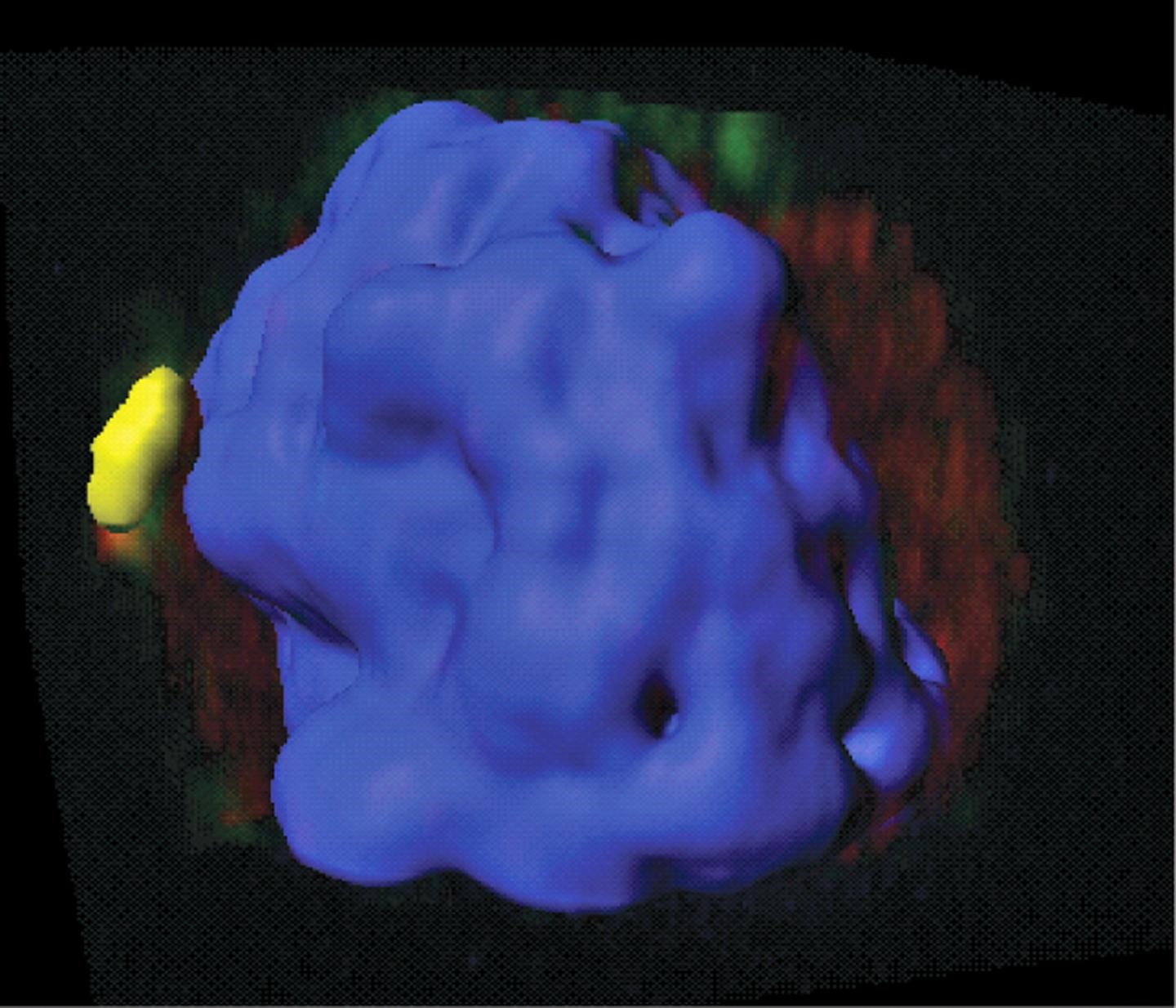 Image: Confocal microscopic image uses color fluorescence to illustrate how the protein Gimap5 (upper-right faint green area) and the enzyme GSK3 (red) overlap in small structures called vesicles inside cells (colocalized yellow area) on a healthy mouse T cell. This happens before GSK3 enters the cell nucleus (shown in blue). This step is important to limit DNA damage in active T cells during their expansion. Image courtesy of Cincinnati Children's and was published in Nature Communications.