A new study reveals a potential link between high salt intake and cognitive deficiency. The study was performed on mice who were fed a high salt diet that was 8- to 16-fold higher than a normal diet for eight weeks. Using magnetic resonance imaging (MRI), the research team found that there was a 25 percent and 28 percent reduction in blood flow to the cortex and hippocampus, respectively. The complete findings were published in Nature Neuroscience.
Further analysis of the mice revealed that endothelial cells lining their blood vessels produced less nitric oxide, a gas which helps relax the vessels and increase blood flow. The team reports that the reduced blood flow led to dementia and observed that the mice performed poorly on several behavioral experiments including an object recognition test, a maze test, and nest building.
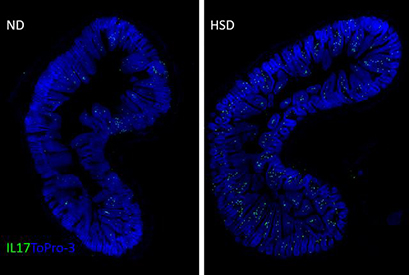
More experiments revealed that the mice had an increase in TH17 cells in the small intestine. The increase in this immune cell population led to enhanced expression of IL-17, a cytokine known to play a part in reduced nitric oxide production in cerebral endothelial cells. In an attempt to reverse the impact of IL-17, the research team used a small molecule to inhibit the ROCK signaling pathway, a kinase pathway known to play an important role in many diseases such as diabetes and neurodegenerative diseases. The team was able to successfully reduce IL-17 levels and show that the mice had improved cognitive function. These findings emphasize the potential of ROCK inhibitors for drug discovery and development.
 "The IL-17-ROCK pathway is an exciting target for future research in the causes of cognitive impairment," said Dr. Giuseppe Faraco, assistant professor of research in neuroscience in the BMRI and first author of the study. "It appears to counteract the cerebrovascular and cognitive effects of a high-salt diet, and it also may benefit people with diseases and conditions associated with elevated IL-17 levels, such as multiple sclerosis, rheumatoid arthritis, inflammatory bowel disease and other autoimmune diseases."
Image: White blood cells that produce a protein called IL-17 (green) accumulate in large numbers in the small intestine of mice fed a high-salt diet for eight weeks (right), compared with mice fed a normal diet. This magnified image shows cells in a part of the intestinal layer that absorbs digested food and protects against infection. Image courtesy of The Iadecola Lab.