Last week, an international research team led by Department of Energy (DOE) scientists published the first results of a long-term plan to sequence, annotate, and analyze the genomes of 300 Aspergillus fungi in PNAS. They reported that these findings are a proof of concept of novel methods to functionally annotate genomes in order to more quickly identify genes of interest.
"This is the first outcome from the large-scale sequencing of 300+ Aspergillus species," said study co-author Igor Grigoriev, head of the DOE Joint Genome Institute (JGI) Fungal Genomics Program. "With the JGI's strategic shift towards functional genomics, this study illustrates several new approaches for functional annotation of genes. Many approaches rely on experiments and go gene by gene through individual genomes. Using Aspergillus, we're sequencing a lot of closely-related genomes to highlight and compare the differences between genomes. A comparative analysis of closely related species with distinct metabolic profiles may result in a relatively small number of species-specific secondary metabolism genes clusters to be mapped to a relatively small number of unique metabolites."
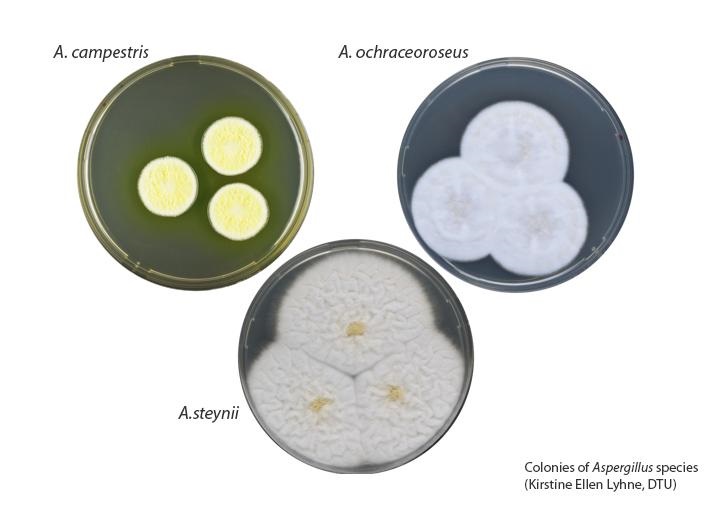
In the study, the team sequenced and annotated 6 Aspergillus species; 4 were sequenced using the Pacific Biosciences platform, producing very high-quality genome assemblies that can serve as reference strains for future comparative genomics analyses. A comparative analysis involving these genomes and other Aspergillus genomes—several of which were sequenced by the JGI—was then conducted, and allowed the team to identify biosynthetic gene clusters for secondary metabolites of interest.
"One of the things we found to be interesting here was the diversity of the species we looked at—we picked four that were distantly related," said study senior author Mikael R. Andersen, professor at Technical University of Denmark (DTU). "With that diversity comes also chemical diversity, so we were able to find candidate genes for some very diverse types of compounds. This was based on a new analysis method that first author Inge Kjaerboelling developed. Moreover, we also showed how to solidify said predictions for a given compound by sequencing additional genomes of species known to produce the compound. By looking for genes found in all producer species, we can elegantly pinpoint the genes."
"The secondary metabolites are important because they represent such interesting and novel chemistry with regard to the biosynthesis of molecules that could be biofuels, biofuel precursors, or bioproducts," study co-author Scott Baker, a fungal researcher at the Environmental Molecular Sciences Laboratory, a DOE Office of Science User Facility located at the Pacific Northwest National Laboratory, and a member of JBEI's Deconstruction Division, explained.
"While it is a significant effort to determine the structures of purified secondary metabolites, it is often relatively straightforward. However, connecting these molecules to their biosynthetic pathways can be quite challenging. We show that using comparative genomics can efficiently lead to reasonable predictions of gene clusters involved in biosynthetic pathways."
Image: Colonies of Aspergillus (clockwise from top left): A. campestris; A. ochraceoroseus; and, A.steynii. These 3 species were among those whose genomes were sequenced in the study. Image courtesy of Kirstine Ellen Lyhne, DTU.