Phase 1 clinical trials have shown that the Zika purified inactivated virus (ZPIV) vaccine is safe and does induce an immune response. The results were published yesterday in The Lancet and come from researchers at the Walter Reed Army Institute of Research and the National Institute of Allergy and Infectious Diseases.
The ZPIV vaccine contains virus particles that have been inactivated and therefore cannot be replicated. However, the immune system can still recognize the inactivated virus.
From a cohort of 67 adult participants, 55 received the vaccine along with an adjuvant and 12 received a placebo. All the participants received two intramuscular injections of the same dose four weeks apart.
The investigators drew the participants blood and tested them periodically. They found that more than 90 percent of the individuals that received the vaccine had antibodies against Zika within four weeks after the last dose.
The researchers then transferred the vaccinated participants' antibodies into mice and then infected the mice with Zika virus. They found that the antibodies provided protection against Zika viremia (detectable virus in the blood).
 "Zika remains a threat to U.S. military personnel and families of service members. We aim to develop a vaccine to protect the military, as well as the global community," said Colonel Nelson Michael, Zika program leader at the Walter Reed Army Institute of Research.
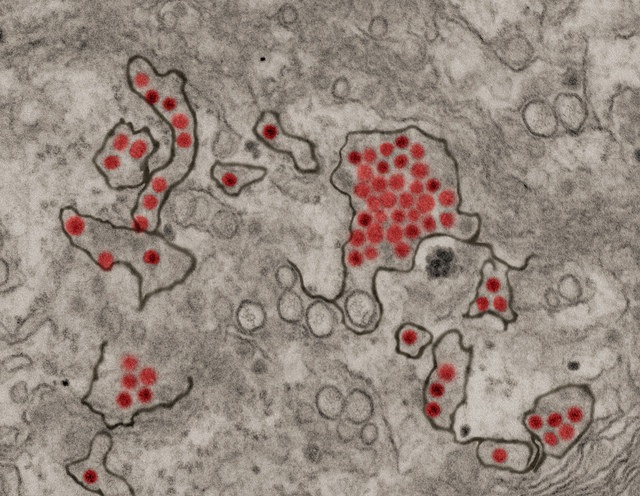
Image: Zika virus particles (red) shown in African green monkey kidney cells. Image courtesy of National Institute of Allergy and Infectious Diseases.