Just because two GSK3 proteins may seem similar, doesn't mean they are. In a new study published today in Developmental Cell, University of Southern California (USC) researchers spell out the important differences between two similar forms of GSK3, which in excess is implicated in diabetes, cancer, Alzheimer's disease and ALS.
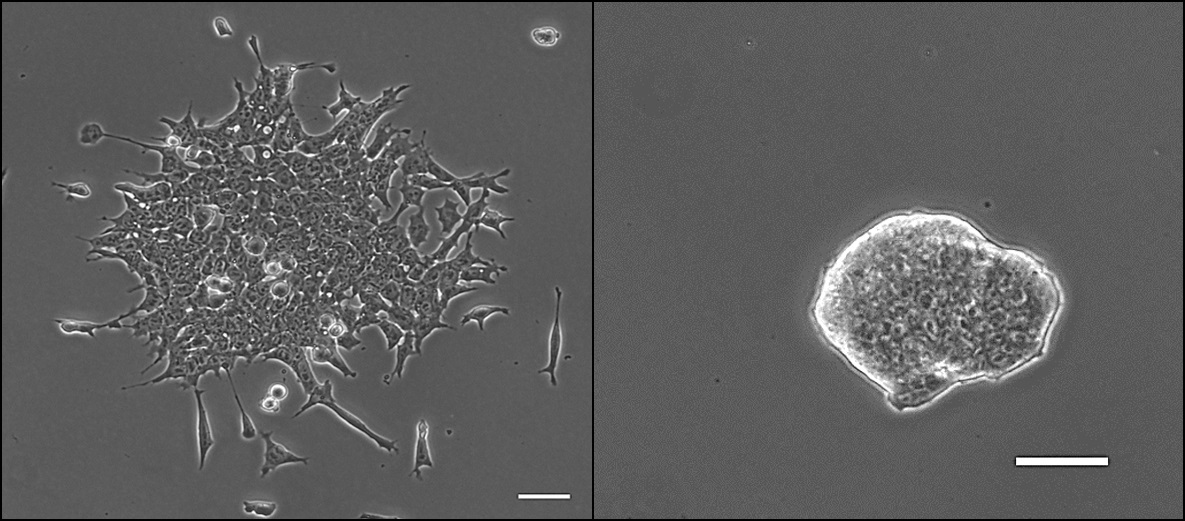
Xi Chen, a Ph.D. student in Qi-Long Ying's lab at USC, studied GSK3-beta and GSK3-alpha and explains the differences between the two in embryonic stem cells. Chen found that inhibiting GSK3-beta can promote stem cell self-renewal while inhibiting GSK3-alpha can trigger differentiation into neural cells.
"The key message is that selective inhibition of GSK3-alpha and GSK3-beta has very distinct effects on embryonic stem cell fates," said Ying, professor of stem cell biology and regenerative medicine. "This is likely also true for other cell types."
To figure out how to selectively inhibit the similar forms of GSK3, Ying's lab work with Chao Zhang's chemistry lab at USC. "This is an elegant study resulting from collaborative efforts between two labs of complementary expertise. We employed an innovative chemical approach to tackle a biological problem that would be difficult to study using conventional methods," said Zhang.
 Since GSK3 is a potential target in therapeutics against diabetes, cancer, Alzheimer's disease and ALS, the researchers warn that extra caution should be taken when developing drugs that target GSK3. Otherwise, unexpected effects can arise.
Image: Inhibition of GSK3 is critical for maintaining embryonic stem cell (ESC) identity (left panel, ESCs are differentiating without inhibition of GSK3; right panel, nice self-renewing ESCs when GSK3 is inhibited). Image courtesy of Xi Chen from the Ying Lab at USC.