A new method that enables precision genome editing has been developed by Johns Hopkins scientists who say they have experimentally determined donor DNA design rules that maximize the recovery of edits without cloning or selection. They believe this finding will enable rational design of synthetic donor DNAs for efficient genome editing.
The findings were published in Proceedings of the National Academy of Sciences earlier this week.
"CRISPR is a tool to help scientists modify the genome, predict the outcome of certain traits and study them, but the tool itself only creates breaks in the genome. It does not control how a new DNA sequence is inserted into the genome," noted Geraldine Seydoux, Ph.D., the Huntington Sheldon Professor in Medical Discovery in the department of molecular biology and genetics and vice dean for basic research at the Johns Hopkins University School of Medicine, and an investigator with the Howard Hughes Medical Institute.
"We set out to study how cells repair breaks induced by CRISPR with the goal of using the cell's natural DNA repair process to introduce new sequences in the genome. We were surprised to find that cells will readily copy sequences from foreign DNA to repair DNA breaks, as long as the foreign DNAs are linear," Seydoux said. "By studying how foreign DNA fragments are copied during the repair process, we came up with some simple rules to make genome editing as efficient as possible, optimize the tool, and do so with confidence."
As scientists have gained more experience with CRISPR, optimal design rules for donor DNA and the length of the homology arms have become issues.
In this study, the researchers found that linear DNA fragments function very well as donors, and are two to five times more efficient than plasmids in human cells. "Linear DNA is very easy to prepare in the laboratory, using PCR," explained research associate Alexandre Paix. He also tested various lengths of homology arms and found that the sweet spot for homology arms is about 35 nucleotides in length.
In fact, it was discovered that homology arms of 33 to 38 nucleotides in length were as successful as those with 518 nucleotides, yielding between 10 and 20 percent successful edits under optimal conditions. In contrast, when the scientists tested homology arms of 15 and 16 nucleotides in length, the insertion success rates dropped by half.
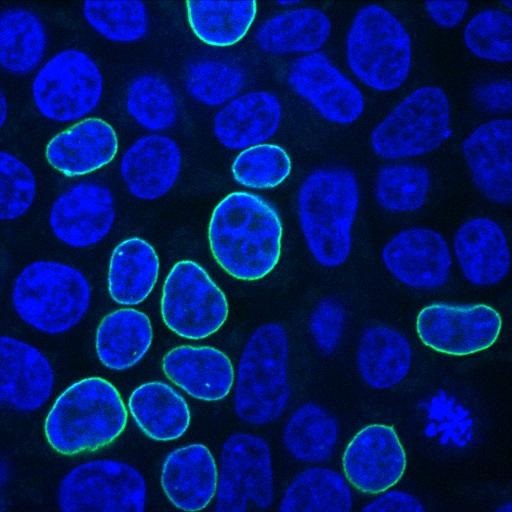
They also found that the newly inserted sequence, not counting the homology arms, can be up to 1,000 nucleotides in length.
The team achieved success rates between 10 and 50 percent with inserts ranging from 57 to 993 nucleotides in length. Shorter sequences were more successfully inserted than longer ones. For example, new sequences that were 57, 714, and 993 nucleotides long were successfully inserted 45.4, 23.5, and 17.9 percent of the time, respectively. Beyond 1,000 nucleotides, new inserts with 1,122 and 2,229 nucleotides had little success—about 0.5 percent of the time. "At that size, it becomes very difficult to introduce the quantity of donor DNA needed for editing. Cells tend to 'choke' on so much DNA," Seydoux added.
Finally, the team also found that the success rate of editing peaks when the new sequence is positioned within 30 nucleotides from the CRISPR cut site. "Beyond 30 nucleotides, the insertion is not workable," Seydoux said.
"These parameters should accommodate most genes that scientists are seeking to edit. In fact, most experiments involve editing only two to three nucleotides close to the CRISPR cut site," she explained.
Image: Human embryonic kidney cells glow green after repair of a CRISPR-induced DNA break with a PCR fragment encoding a fluorescent protein and homology arms with 33 nucleotides. Image courtesy of Alexandre Paix.