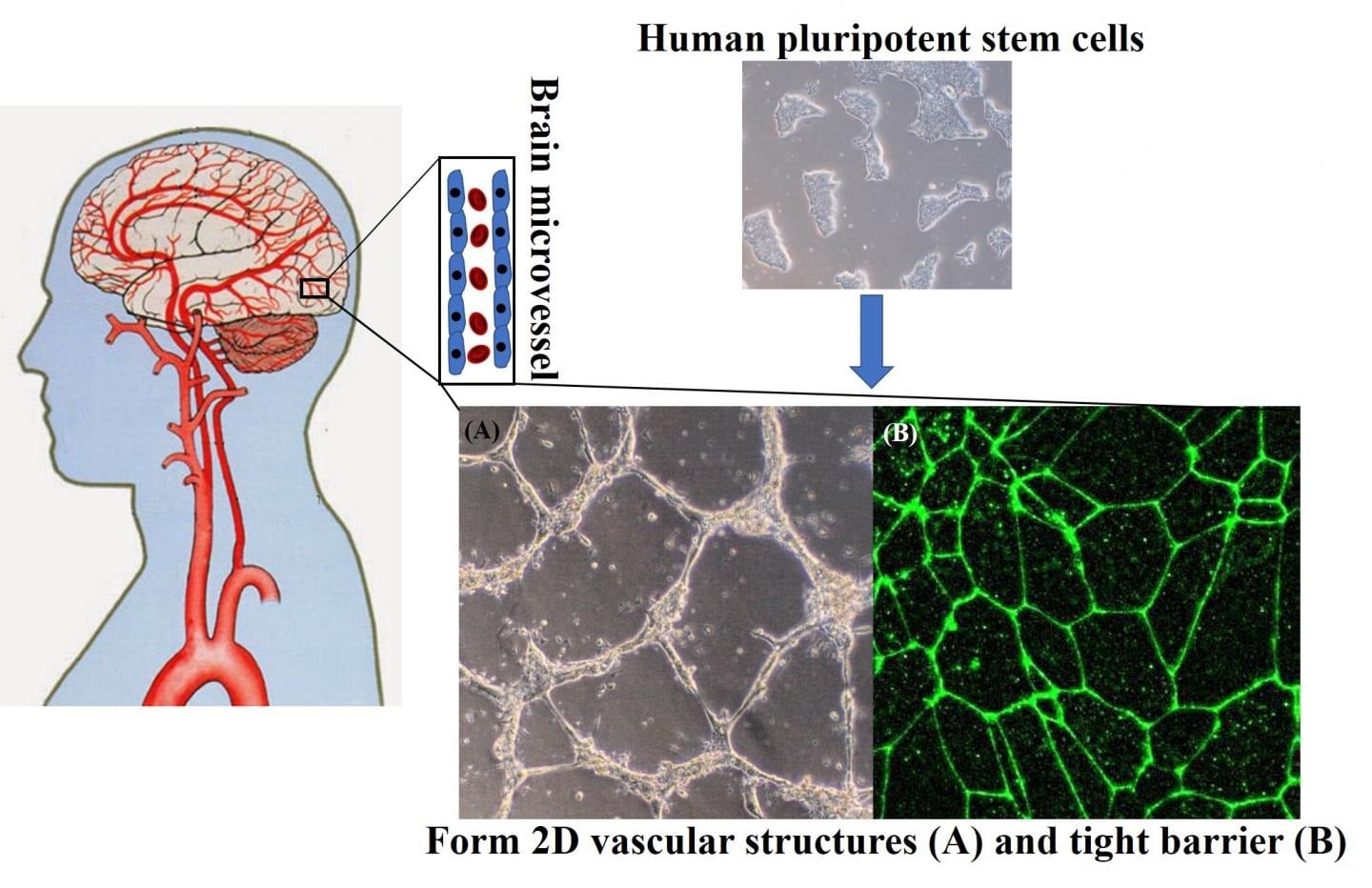
Researchers at the University of Wisconsin-Madison have created a human blood-brain-barrier for the laboratory dish so that it would be easier to study it without going into an in vivo model. The work was published yesterday in Science Advances.
"The main advance is we now have a fully defined process that uses small molecules to guide cells through the developmental process," says Sean Palecek, a professor at the University of Wisconsin-Madison. "It is fully defined. We know what components are acting on the cells"
In this study, the researchers were able to direct stem cells to become the cell they desired. They identified chemical molecules that can help chaperone cells through the various stages of development to become the brain endothelial cells. The team has been able to make these cells in quantities useful for research and high-throughput drug screens.
 "Other approaches require mixing and co-culture of other cell types," explains Eric Shusta, a professor at the University of Wisconsin-Madison. "This will enable the non-expert to deploy the model. It's an off-the-shelf recipe."
The researchers hope that their blood-brain-barrier recipe will help other researchers be able to assess toxicity and effect of promising therapies more easily.
Image: Blood-brain-barrier. Image courtesy of UW-Madison.