Scientists from the University of Minnesota have created a lab-grown blood vessel replacement made of biological materials, but no living cells. The details of the study can be found in yesterday's Science Translational Medicine.
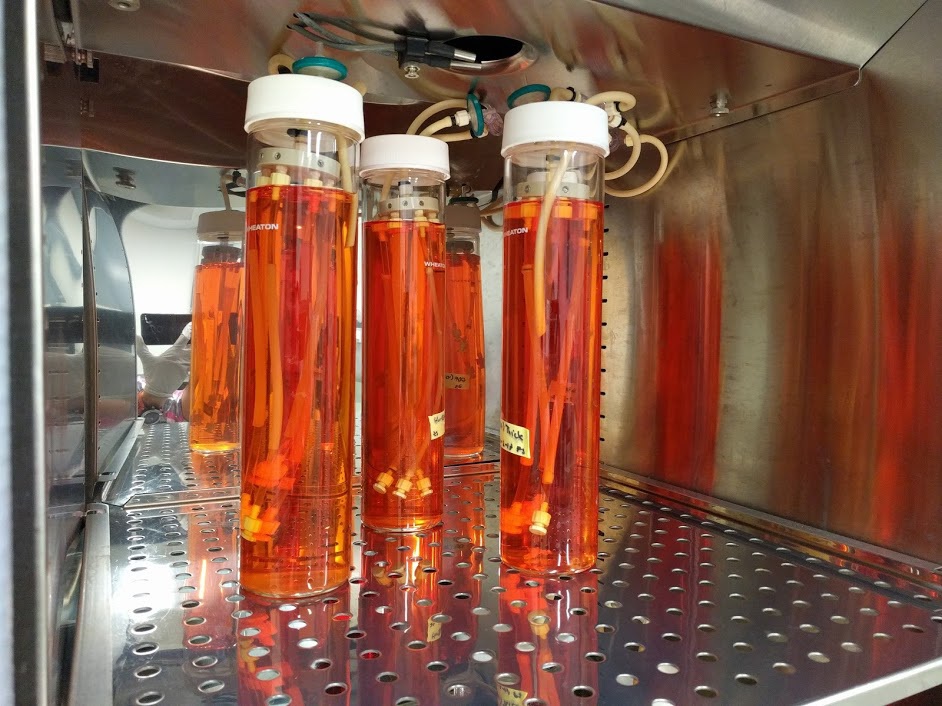
In this study, the team generated vessel-like tubes from post-natal human skin cells that were embedded in a gel-like material made of cow fibrin. They then put this cell-populated gel in a bioreactor, grew the tube for seven weeks and then washed away the cells over the final week. What remained was a tube made of collagen and other proteins secreted by the cells.
"We harnessed the body's normal wound-healing system in this process by starting with skin cells in a fibrin gel, which is Nature's starting point for healing," said study leader Robert Tranquillo. "Washing away the cells in the final step reduces the chance of rejection. This also means the vessels can be stored and implanted when they are needed because they are no longer a living material."
To test the vessels, the researchers implanted the tubes into adult baboons. After six months, they saw the grafts appeared like blood vessels and healthy cells from the recipient adapting well to them. The vessels were also shown to be able to withstand 30 times the average human blood pressure without bursting. There was no sign of an immune response and the grafts were able to self-heal when punctured with a needle.
 From this study, Tranquillo and the team are seeking FDA approval for clinical trials in children with pediatric heart defects.
Image: Researchers at the University of Minnesota have created a new lab-grown blood vessel replacement that is the first-of-its-kind nonsynthetic, decellularized graft that becomes repopulated with cells by the recipient's own cells when implanted. Image courtesy of University of Minnesota.