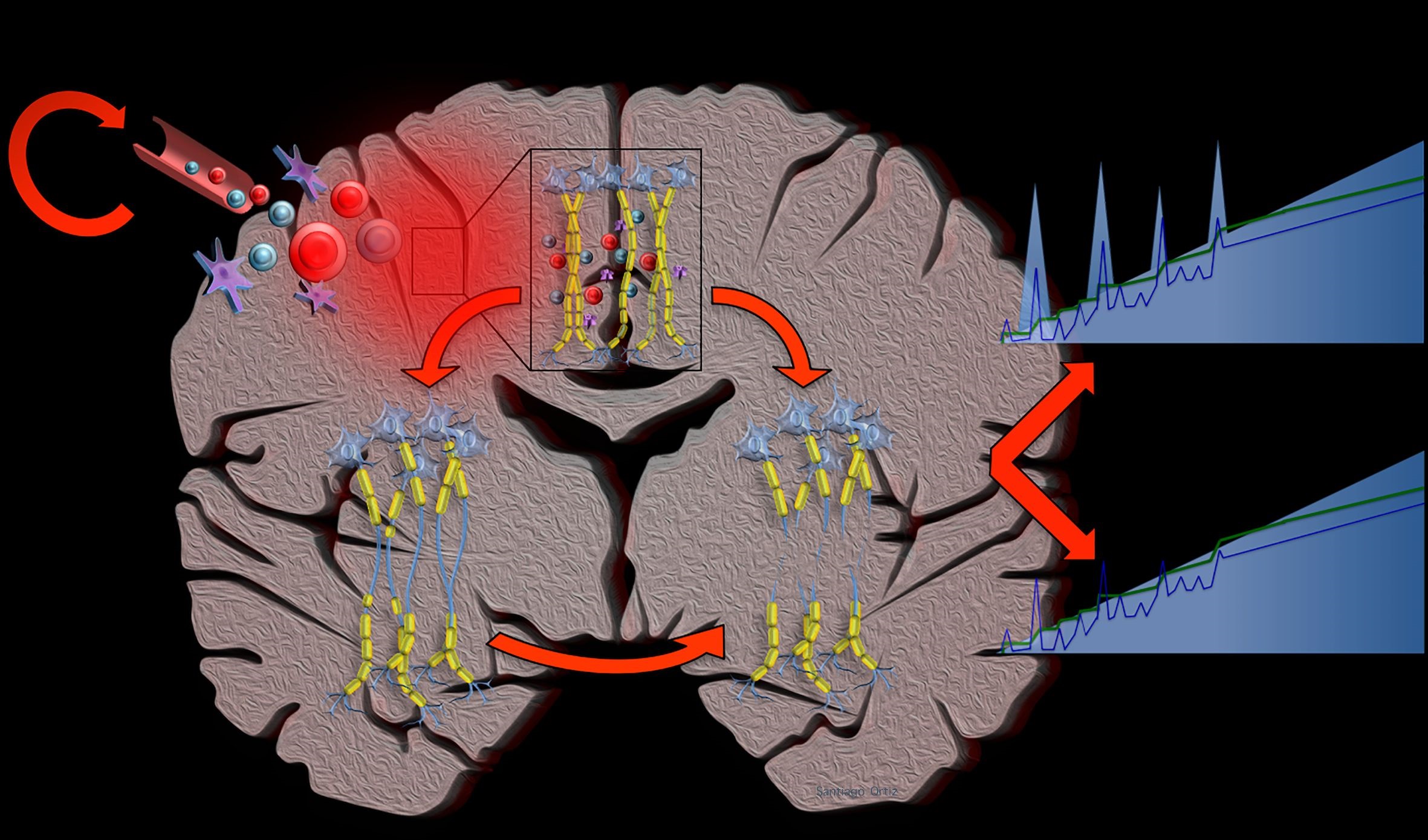
 Symptoms and patterns of multiple sclerosis (MS) progression over time can vary between patients, which suggested that MS is actually two or more different diseases. However, a new study from the University of Barcelona, Spain explains that the disease is really a single disease with common mechanisms. The work was published in yesterday's PLOS Computational Biology.
The researchers developed a mathematical model of MS based on experimental data from 66 patients who had been followed for up to 20 years. This model allowed them to conduct computational simulations of different biological processes involved in the disease.
The group tested their validity of the model with a group of 120 MS patients and found they were able to reproduce the variability of the disease courses seen in the patients. Their results support the idea that symptoms and disease courses observed in MS patients come from the same mechanisms that damage the nerve cells.
"This concept has significant therapeutic implications and will drive the development of new therapies because it implies that MS will produce significant disability if suffered for enough time in all patients," says co-author Pablo Villoslada.
Image: The diverse phenotype of Multiple Sclerosis is the consequence of the dynamic damage to the brain. Chronic autoimmune inflammatory damage to the brain produces waves of demyelination (blue line in the graph) and cumulative axonal loss (green line in the graph) in different intensities along time leading to all MS phenotypes. Image courtesy of Santiago Ortiz-Perez, from the Institute of Ophthalmology and Center of Neuroimmunology, IDIBAPS - Hospital Clinic, University of Barcelona.