 New research in Cell Metabolism shows that due to obesity, cytokines are released into the bloodstream and impact the metabolism of breast cancer cells. This makes the breast cancer cells more aggressive. The work was published yesterday and comes from scientists at Helmholtz Zentrum München, Technische Universität München (TUM), and Heidelberg University Hospital.
"The current study elucidates an as yet unknown mechanism making breast cancer more aggressive. The enzyme ACC1 plays a central role in this process," said Mauricio Berriel Diaz, Ph.D. "ACC1 is a key component of fatty acid synthesis. However, its function is impaired by the cytokines leptin and TGF-β." The levels of these cytokines are increased particularly in the blood of severely overweight subjects.
In this study, the scientists showed when ACC1 is inhibited, there is an accumulation of fatty acid precursor acetyl-CoA. This precursor interacts with a gene and increases the metastatic capacity of cancer cells.
"Using human tissue from breast cancer metastases, we were able to show that ACC1 was significantly less active there," said Marcos Rios Garcia, Ph.D., first author of the study. When the scientists blocked the leptin receptor, they saw a reduced metastatic spread of breast cancer tumors in an experimental model.
The researchers plan to further explore the data they collected on the newly discovered mechanism. They also are looking for other intervention points that could be used as therapeutic targets.
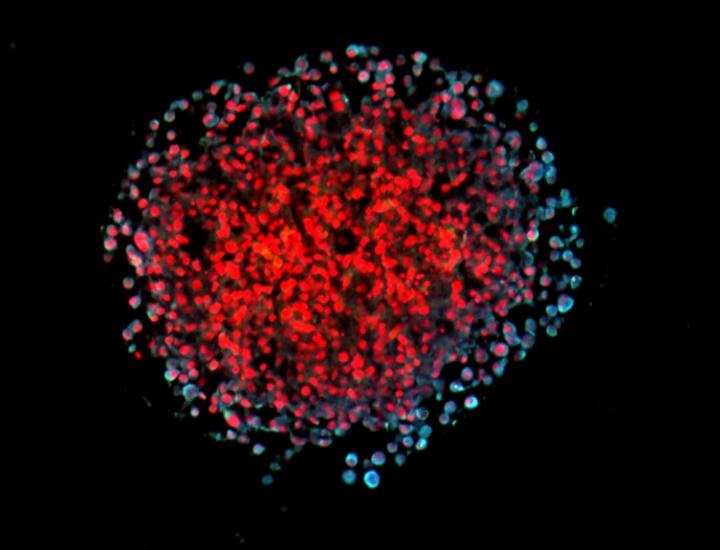
Image: Invasive cells show a light blue co-staining for the leptin receptor and a marker of epithelial-mesenchymal transition (i.e. the ability of cells to metastasize). Cell nuclei are stained in red. Image courtesy of Helmholtz Zentrum München.