 Scientists from Brigham and Women's Hospital and Monash University provide new insights into T cell receptor (TCR) autoreactivity to self-phospholipids. The work can be found in last week's Science Immunology.
"We've been interested in autoimmune diseases for decades, and it's thought that in certain autoimmune diseases like psoriasis, multiple sclerosis and type 1 diabetes are driven by particular tissues. The search for the particular molecules, known as antigens, that trigger autoimmune diseases has focused on proteins and peptides, but we should also be thinking about lipids as candidate antigens for autoimmune disease, " said D. Branch Moody, M.D, principal investigator at Brigham.
Previous studies from Brigham have hinted that T cells could respond to lipids. This newly published study suggests that T cells can, in fact, respond to lipids and shows the physical structures that make this recognition possible.
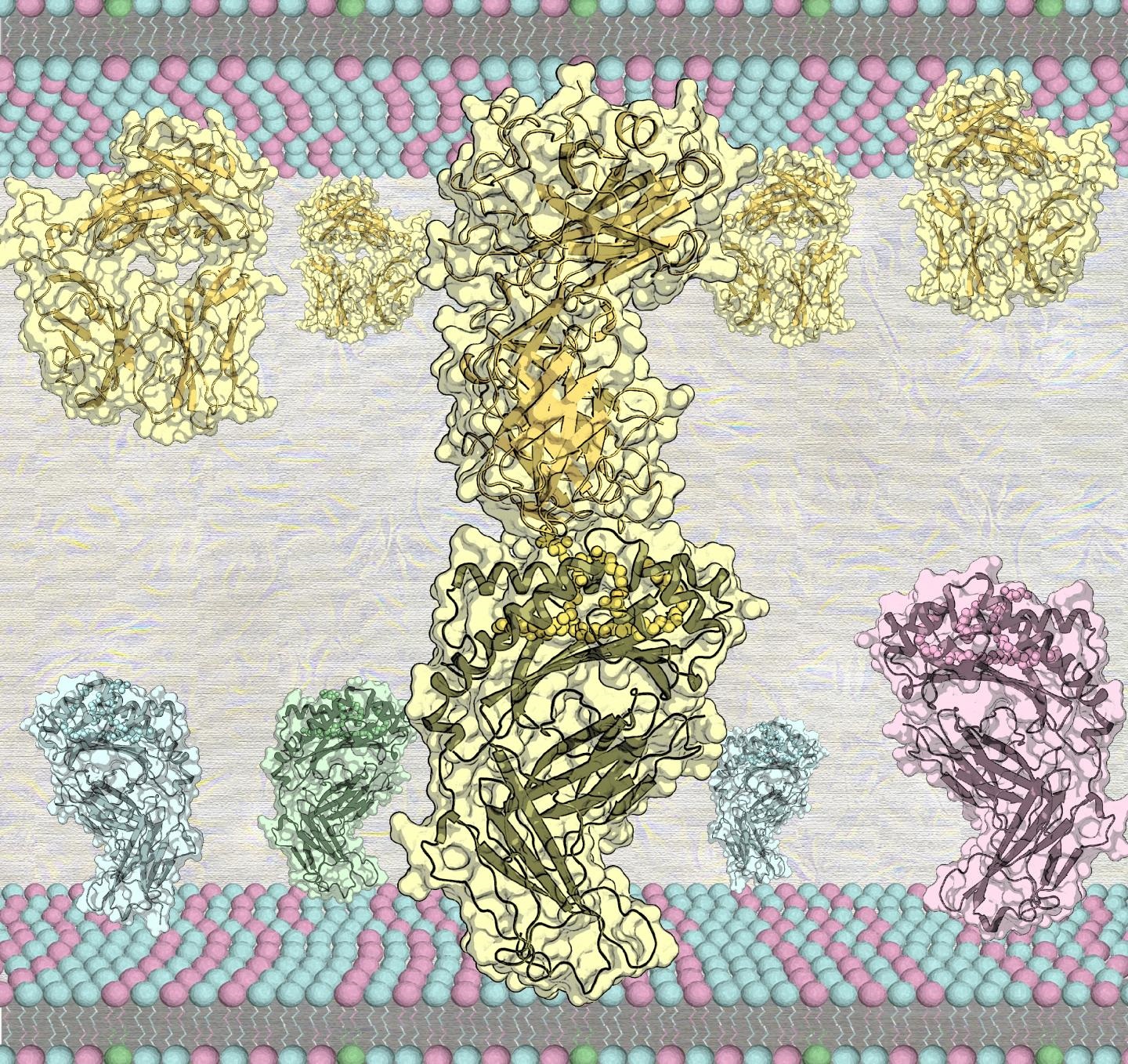
T cells are normally activated by a dendritic cell that presents an antigen. In this work, the researchers showed how a protein on the surface of a CD1b dendritic cell binds to lipids. That lipid then binds to a T cell receptor, activating an immune response.
"The advanced imaging facilities of the Australian Synchrotron have allowed us to generate three-dimensional models of T-cell receptor interaction against CD1b and lipid antigens," said Adam Shahine, Ph.D., of the Australian Research Council Centre of Excellence in Advanced Molecular Imaging at Monash University in Australia. "These results highlight the role of CD1b in a phospholipid-mediated immune response, and grant us a deeper understanding of the mechanisms of lipid-based autoimmune disease."
"We now have these beautiful, three-dimensional images of how three different molecules can interact, which explains some detail about which part of the lipid matters. Knowing the precise structure of the complexes involved in this process could be useful for designing new kinds of lipids that could turn on or off the immune response," said Moody.
Image: T-cell Receptors (gold, upper) on the surface of T-cells selectively bind the lipid antigen presenting molecule on dendritic cells, CD1b (lower), presenting a rare cellular phospholipid (gold), over common phospholipids found in membranes (pink, cyan and green), which in turn induces an autoimmune response. Image courtesy of Shahine et al.