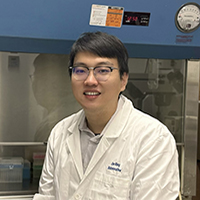
 Jiye Wang, M.S., Research Scientist at BioInnovatise
Jiye Wang joined BioInnovatise in 2021, after graduating from the University of Florida with a master’s degree in biomedical engineering. In his role as a Research Scientist within the molecular biology production team, he supports the rapid delivery of custom cloning services and products to external clients across government, academia, and industry. His expertise encompasses lentivirus packaging, molecular cloning, mutagenesis, and high-volume plasmid DNA production, and his work has contributed to vital therapeutic advancements, published in top journals.
An introduction to BioInnovatise
Based in Rockville, MD, BioInnovatise is a contract development and manufacturing organization (CDMO) that serves research and development laboratories in the I-270 Technology Corridor and beyond. Specializing in services for plasmid DNA and viral vector-based research, BioInnovatise collaborates with partners including Johns Hopkins University, the University of Maryland School of Medicine, Virginia Commonwealth University (VCU), and the National Institutes of Health (NIH) research labs to drive innovation in cell and gene therapy, immunotherapy, precision medicine, and many other scientific disciplines.
Facilitating novel discovery
Because BioInnovatise works with external clients, it is not always privy to the exact nature of the research it is supporting. However, Wang explains that a typical project requires him to perform a broad range of molecular biology techniques. “Often, a customer will supply a plasmid that requires mutation and cloning before being packaged into lentiviral or retroviral particles for transfection into a mammalian cell line,” he says. “Factors to consider include which plasmid backbone, promoter, and open reading frame (ORF) to use, as well as whether to include a tag or reporter. In addition, the choice of viral vector, cell type, and transfection protocol can all impact transfection efficiency. By working closely with our partners, we ensure that the services we provide align with specific research needs.”
Helping to change the world
When asked what drives him, Wang says that he is proud to be helping others make discoveries that have the potential to change the world. “While being a bench scientist isn’t cool compared to being an engineer in NASA, and isn’t likely to make big money like a career in computer science or finance, the type of work that I do could theoretically make a huge difference to people’s lives,” he says. “By helping esteemed scientists in, for example, NIH or a globally recognized university, I feel that I’m contributing to a bigger picture, whether that be providing a product or service that someone will use for their dissertation, supporting the development of a life-saving vaccine, or helping to advance a novel treatment for cancer.”
Exploring next-generation viral vectors
At BioInnovatise, Wang is renowned for exploring unconventional paths in molecular biology, which includes a keen interest in next-generation viral vectors. “Vector evolution has been driven by the need to enhance safety and improve the efficiency of gene delivery,” he reports. “For example, second-generation lentiviral vector systems include additional mutations in the packaging plasmid to reduce the generation of replication-competent lentiviruses, while third-generation systems take things one step further by separating the gag/pol and rev functions into two different plasmids. While there is currently no fourth-generation lentivirus packaging system, this may yet become a reality once researchers determine how to further increase viral payload and transfection efficiency, and decrease the biosafety risk. One of my focus areas is how BioInnovatise can accommodate the future use of Anelloviruses or non-viral vectors for delivering genetic payloads into host cells since demand for these approaches looks set to rise.”
Collaboration is the key to success
Besides collaborating with external clients, Wang stresses that collaboration within BioInnovatise is key to delivering what its customers need. “By working together, we are able to come up with creative solutions to problems,” he says. “This could mean speaking with our founder and CEO, Dr. Bing Jiang, to figure out how best to improve transfection efficiency, or liaising with our marketing and sales colleagues to communicate project progress, client requirements, and future strategies. Importantly, a collaborative culture means we are able to provide our clients with accurate information that lets them plan ahead. Ultimately, our goal is to help our partners bring their product to the people who need it most, often by performing those tasks that are not so easy to do.”