Single-use consumables have been a godsend for laboratories, offering inexpensive and sterile alternatives for glass labware and eliminating the need for tedious cleaning procedures.
But, as in daily life, the convenience plastics provide labs comes at an environmental cost; a study conducted by the University of Exeter and published in Nature estimated labs’ plastics waste in 2014 at 5.5 million metric tons. But, unlike in daily life, where refillable or reusable products can help combat the global plastics waste crisis, there are many lab applications where single-use is required for safety and sterility reasons.
Eppendorf, a leading provider of lab consumables, believes single-use doesn’t have to mean unsustainable. The company recently launched 90% biobased polypropylene test tubes that boast a 62% lower carbon footprint compared to conventional, petrochemical alternatives.
Eppendorf Tubes® BioBased can be used for cell culture and cell biology applications, sample preparation protocols in microbiology and molecular biology laboratories, storage of samples and solutions with larger volumes, and preparation of mastermixes and buffers. The biobased polypropylene used in Eppendorf Tubes® BioBased meets the same strict specifications for purity and quality as virgin fossil-based polypropylene and are ISCC PLUS (International Sustainability & Carbon Certification) and My Green Lab® certified.
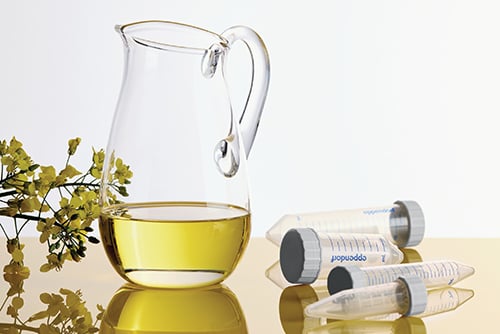
Available in volumes of 5.0 mL, 15 mL, 25 mL, and 50 mL with screw caps, Eppendorf Tubes® BioBased are made from food oil waste and residues, and 10% from conventional fossil-based feedstocks. Using cooking oil waste avoids the biodiversity loss and land-use concerns associated with other bioplastic feedstocks, such as corn and sugarcane. Used cooking oil is also plentiful, with more than 4 million tons available in the European Union annually and over 200 million metric tons worldwide. Some EU countries already have a collection system available for private households.
End-of-life options for Eppendorf Tubes® BioBased are identical to conventional tubes and vary based on local regulations. In some cases, recycling is possible. Where bio- or chemical-hazard designations require incineration, energy and heat can be recovered via thermal recycling. Both scenarios contribute to and decouple single-use consumables from the usage of fossil resources—in line with many labs’ efforts to align purchasing decisions with sustainability.