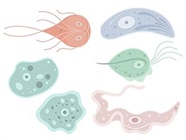
The main classes of parasites that infect humans include unicellular protozoa, multicellular helminths, and larger ectoparasites. In 2013, over one million deaths worldwide have been attributable to parasites. The mosquito-borne protozoa, Plasmodium falciparum and P. vivax, cause malaria by infecting hepatocytes and red blood cells. This infectious disease is the leading cause of death from parasitic infection, claiming over 850,000 deaths. Insect-borne unicellular trypanosomes, Trypanosoma brucei, T. cruzi and Leishmania, cause the African sleeping sickness, Chagas disease and leishmaniasis respectively. Altogether, these infections cause over 80,000 deaths. Free living amoebas such as Cryptosporidium and Entamoeba cause cryptosporidiosis and amoebiasis, respectively. Schistosomiasis from infection by the flatworm, Schistosoma, is a leading cause of kidney disease in Africa. We have catalogued a number of parasite-specific antibodies from a variety of vendors. Browse through them in our search tool to aid in your infectious disease research.
Faster, more precise antibody discovery for next-generation therapeutics
read more
Hallmarks of ferroptosis and common detection methods
read more
The Cytek Aurora
™ Evo system is the latest advancement in spectral flow cytometry. As pioneers in the field, Cytek remains at the forefront of innovation with our proprietary Full Spectrum Profiling
™ technology. The new system delivers the same high-...
read more
The S-RMab® Tau (pT217) IVD antibody pair (Capture S0B3533; Detector S0B3059) provides a powerful solution for Alzheimer’s disease research and clinical diagnostics. Developed using AntBio’s proprietary Single B-Cell and recombinant technologies, ...
read more
We work on using stem cells to model and treat rare pediatric diseases. We differentiate patient-derived iPSCs into neuronal cells and utilize this antibody as a neuron marker
read more
We work on using stem cells to model and treat rare pediatric diseases. We differentiate patient-derived iPSCs into neuronal cells and utilize this antibody as a neural progenitor and neuron marker
read more