Let’s be frank. By far the most expensive part of genomic sequencing is the sequencing itself. The cost of a sequencer’s consumable flow cells and reagents typically dwarf other costs of obtaining a DNA sequence, and that doesn’t even take into consideration capital expenditures.
Yet whether we own our own instrument or are bound to use a core facility’s or CRO’s NovaSeq, there may still be ways to trim costs. Here we look at the sequencing workflow from sample preparation and library preparation to data analysis, to see where expenses can be cut, what are the hidden costs of doing so, and whether it’s worth it.
Own it (or not)
Smaller, lower capacity Illumina sequencers are less expensive to purchase and maintain than larger ones, with a correspondingly lower consumables cost as well. On the other hand, the amount of data generated by higher capacity instruments makes their overall per-megabyte or per-sample cost less. Either way, because the consumables cost per run is essentially fixed, it makes economic sense to fill the sequencer to capacity, notes Hesaam Esfandyarpour, CEO and founder of GenapSys.
This leaves lower-throughput researchers with the options of wasting capacity (and therefore money), waiting until they can fill the sequencer, or outsourcing. The latter choices come with their own downsides, such as service fees and the wait to get back data.
Online marketplaces exist where providers hawk their services, sometimes bidding for projects. “Anything they can do to fill their machines—even at a very reduced margin—has a knock-on effect for the rest of the sequencing on the machine,” points out Andrew Gane, product strategy and technology manager at GE Healthcare.
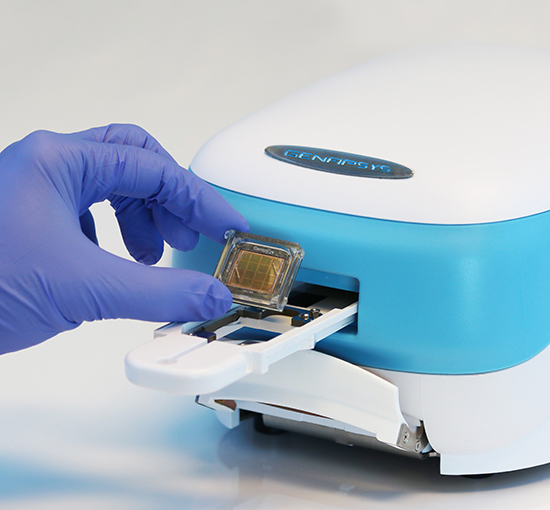
An emerging alternative is the GenapSys system, a $10,000 benchtop sequencer with consumables costing only a few hundred dollars for up to 144 million reads, offering “equal or better quality and accuracy,” Esfandyarpour says. “Every researcher can have a DNA sequencer,” enabling them to run their samples at their discretion.
What to outsource?
There are different entry points to outsourced sequencing services. “A lot of them you can provide them with samples and they will do it all the way through,” Gane says. “Others may take ready-made library prep samples that they just load on their machines.”
This provides potential cost-savings opportunities to researchers willing and able to do their own prep work. For “knowledgeable people” this may mean a homebrew solution.
Otherwise, the first area to look may simply be the cost of kits and other reagents, and perhaps even which ones are necessary. Ask, for example, are there ways to cut back on the number of steps involved in a protocol? Do you need the best, highest-fidelity enzymes and magnetic beads for PCR amplification and size selection?
Researchers—especially those doing single-cell sequencing—may choose to multiplex their samples. “The cost per-sample for single-cell genomics, at least with the 10X platform, is somethings like $1,500 per library prep,” compared to about $100 for a bulk RNAseq reaction, notes Walter Eckalbar, co-director of the UCSF Genomics CoLab. For the latter, he says, it may not be worth going through the additional sample handling and bioinformatics requirements.
“There are ways to normalize the samples before or during multiplexing that can reduce QC times,” Gane says, but those are associated with other costs.
Many considerations—some less obvious than others—go into determining the true cost of running a certain workflow, says Eckalbar. Among these are how many steps, whether “fringe” costs like QCing on a Bioanalyzer, or needing to purchase extra beads, are involved, or even how it fits into a standard workday.
Automation
There are innovative ways to reduce the number of necessary steps in a protocol, leading to savings in cost, time, and equipment. For example, a fluorescent dye incorporated into NuQuant’s kits allows users to directly quantify the library’s molar concentration with a fluorometers or plate reader, without the need to perform qPCR.
Fewer steps also make for easier automation.
“Automation is a smart way to save time, and will save you from making mistakes that you would do in a manual fashion,” points out Willem van Loon, director of genomics at Tecan. “The consistency of the results you get with automated parts is tremendously better … and better libraries will give you a better representation of your sample.”
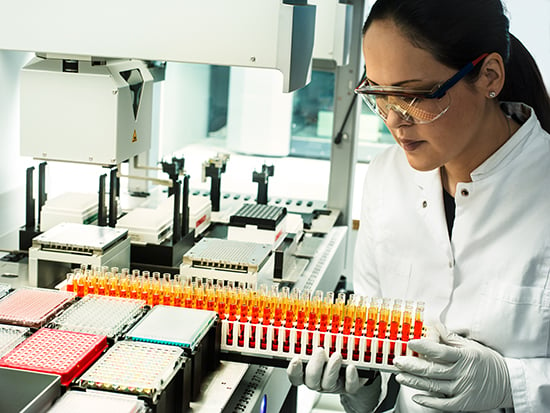
Automation is also the gateway to miniaturization, with its concomitant savings in reagent. “Instead of using the full volumes that are prescribed in the manuals of the sequencing kits, we nowadays use liquid-handling systems to use half- or quarter reactions, or even going to 1/10 of reaction—that’s going to be very difficult to do pipetting manually,” he says. “And automated systems can do that in a higher throughput, in 384-well plates or even higher.”
“The downside to miniaturization is that in most cases you will sacrifice some on the data quality, the number of genes that you detect on a sample might be lower,” says Eckalbar. “But the upside is that given the same budget you can do more samples … giving you more statistical power.”
What does it mean?
Once the sequencing itself is completed, you still need to deal with the data. The options are many, including cloud-based analysis apps included with the cost of the platform’s consumables (as is the case with GenapSys) or for a fee, third-party commercially available user-friendly interfaces and open-source solutions, as well as service providers. Their applicability will hinge, among other factors, on complexity of the biological question and the sophistication of the researcher.
Eckalbar points out that a lot of the free and commercial solutions ultimately can be limiting—your data doesn’t fit in for one reason or another, and you hit a roadblock. “Depending on the specialties of the person or their inclination to do it, a lot of times either the core facility or a collaborator is going to take over at that point.” To push that point further back, and to push the not-unsubstantial bioanalytical costs down with it, “a lot of grad students or post-docs are trying to become savvy enough with the bioinformatic tools to do those things themselves.”